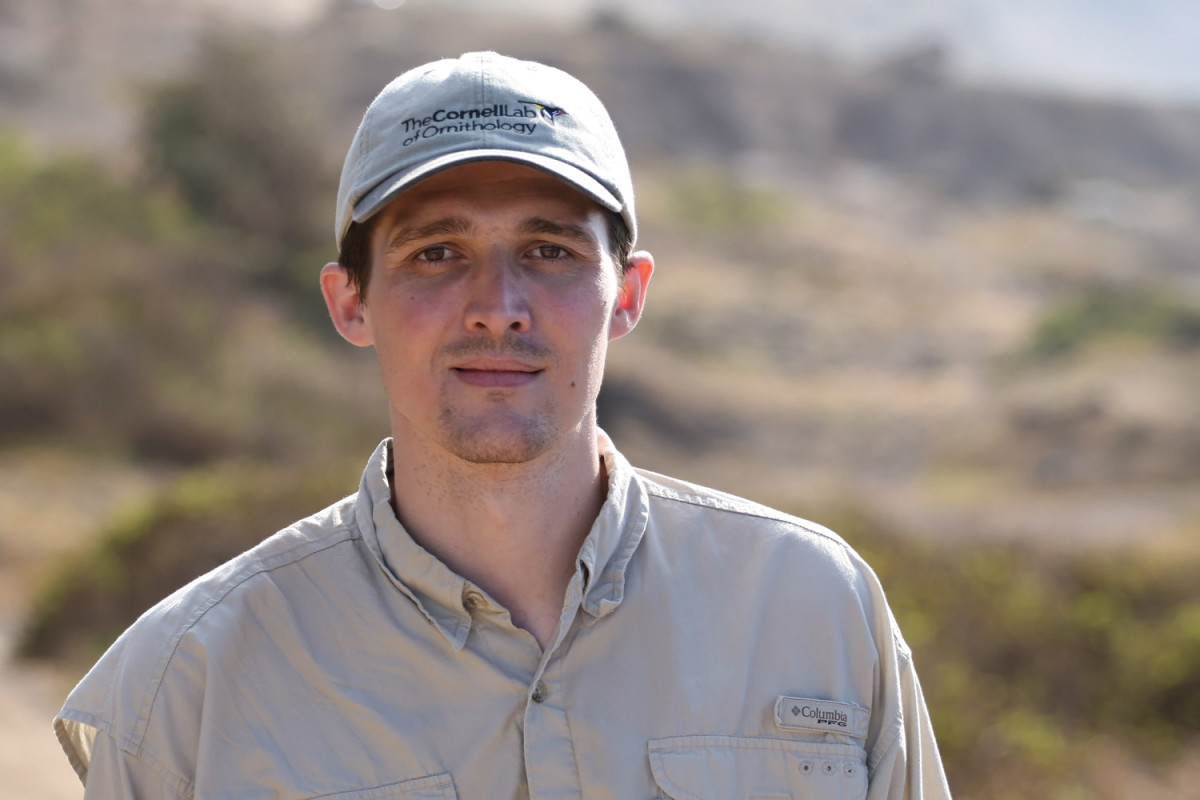
We had an incredible time on the Big Island of Hawaii. During our stay, we encountered sea turtles, explored breathtaking and unique landscapes, and experienced what was arguably the highlight of our entire trip: seeing and hearing Hawaiian honeycreepers in their natural habitat. After our adventures on the Island of Hawaii came to an end, we flew to Oahu to revisit some of our favorite places, which we hadn’t seen since moving away a decade ago. One of the places we were most excited to revisit was a North Shore beach where Hawaiian monk seals regularly come ashore to rest and raise their pups. The Hawaiian monk seal (Neomonachus schauinslandi) is one of the rarest marine mammals in the world and is found only in Hawaii. Its small population faces numerous threats, including habitat loss, entanglement in fishing gear, diseases such as toxoplasmosis, and the ingestion of fishing hooks, which remains one of the leading causes of mortality. While living on Oahu, we were fortunate to see the famous matriarch Honey Girl and several of her descendants at a particular North Shore beach. During our recent visit, we returned to that same location and were delighted to discover that Honey Girl’s family still frequents the area.
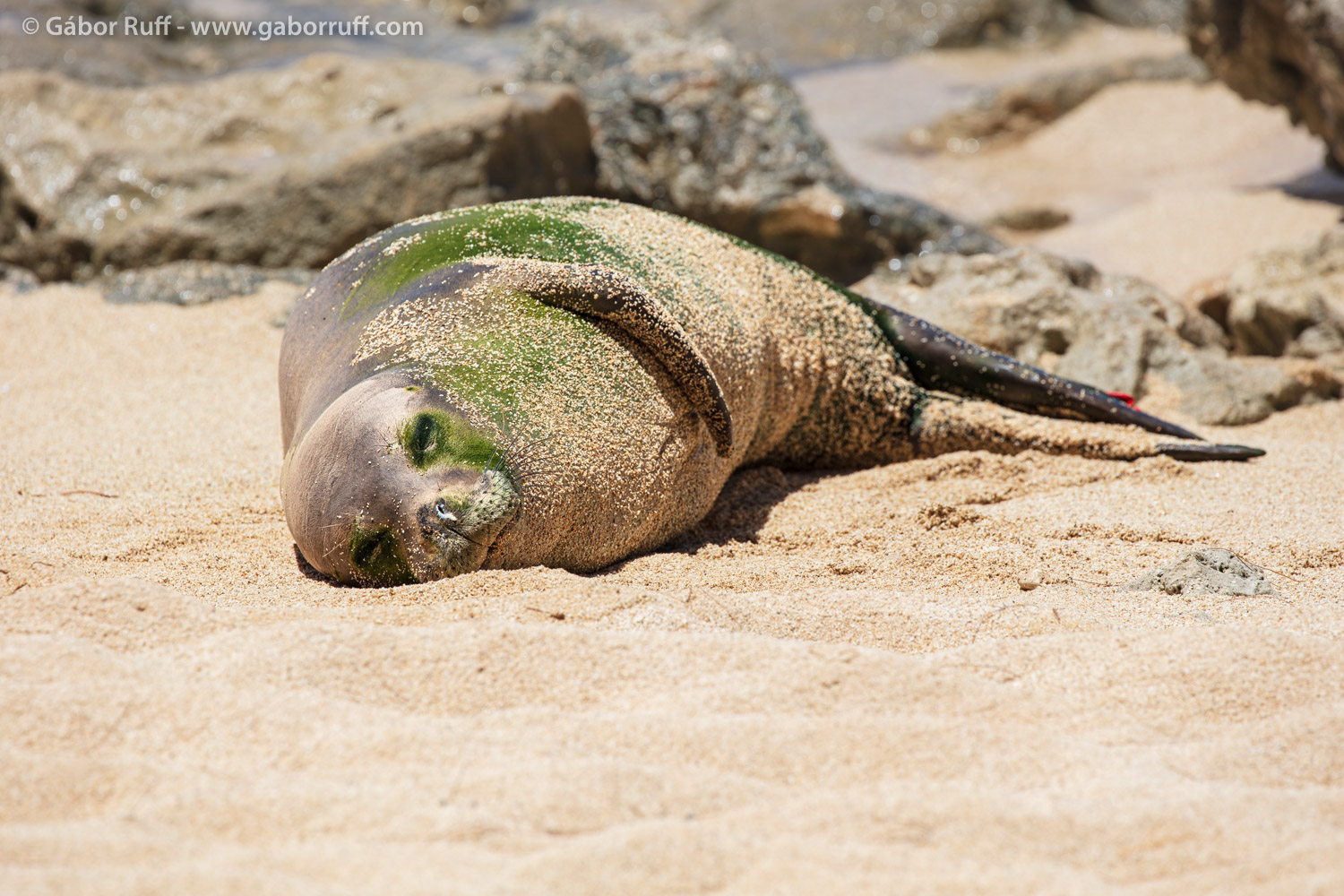
Our first encounter was with Keola, Honey Girl’s great-grandson. At approximately one year old, he had likely come ashore to molt his algae-covered coat. He was fast asleep when we arrived, so we quietly prepared to leave without disturbing him. Just then, a large wave splashed over him, waking him up long enough for me to capture a photo of his wonderfully surprised expression.
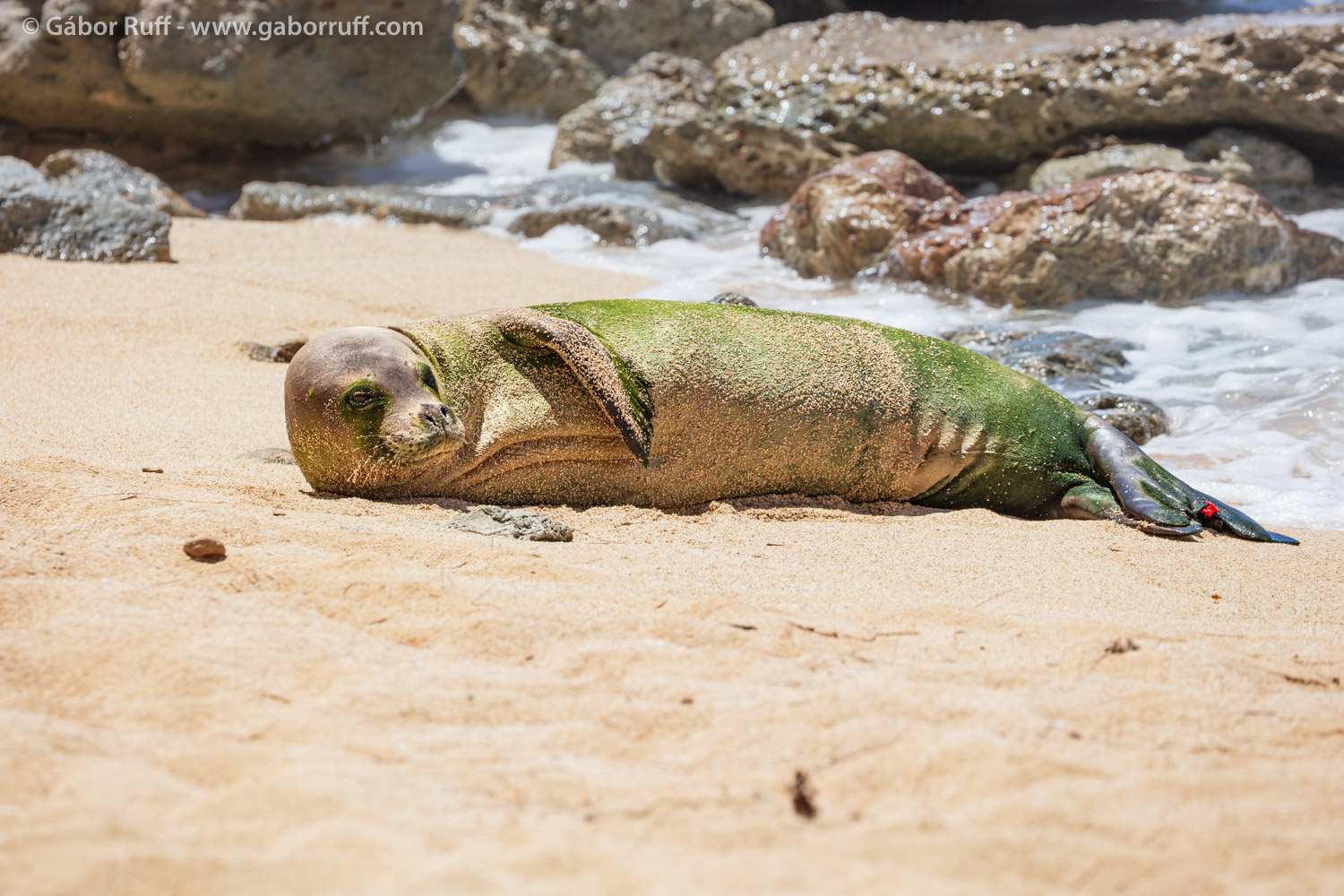
The interruption didn’t seem to bother him for long. After a brief glance around, he settled back into the sand and returned to sleep. Because it is extremely important to give resting monk seals plenty of space, we took one final photograph from a safe distance and continued on our way.
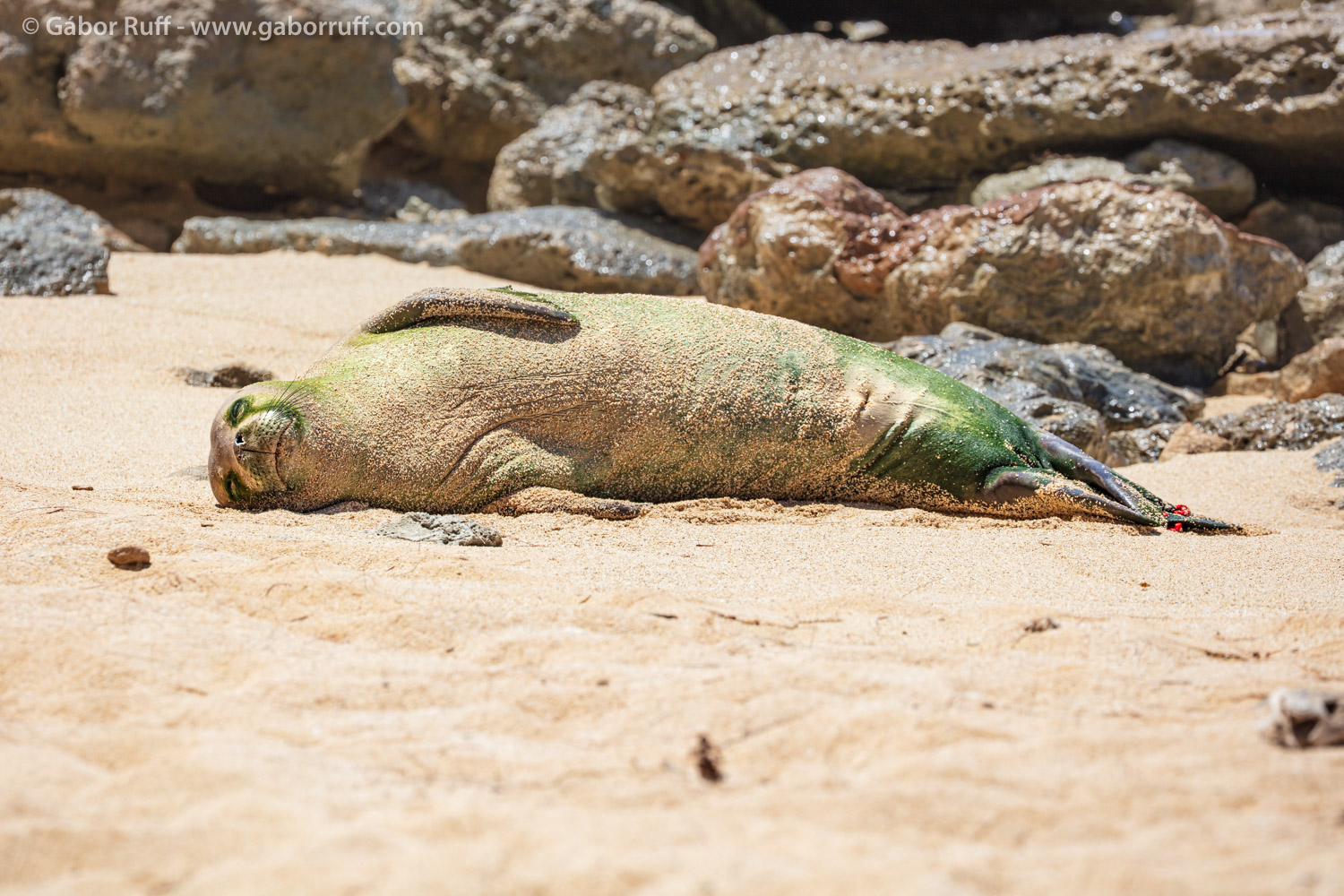
Farther down the beach, we encountered Keola’s mother, Lei Ola, alongside her newborn pup. Volunteers from Hawaii Marine Animal Response were already on site, carefully cordoning off the nursing area. Protecting nursing mothers from disturbance is critical to the survival of this endangered species. We observed the seals from a respectful distance and felt incredibly fortunate to witness such rare and special moments once again after all these years.
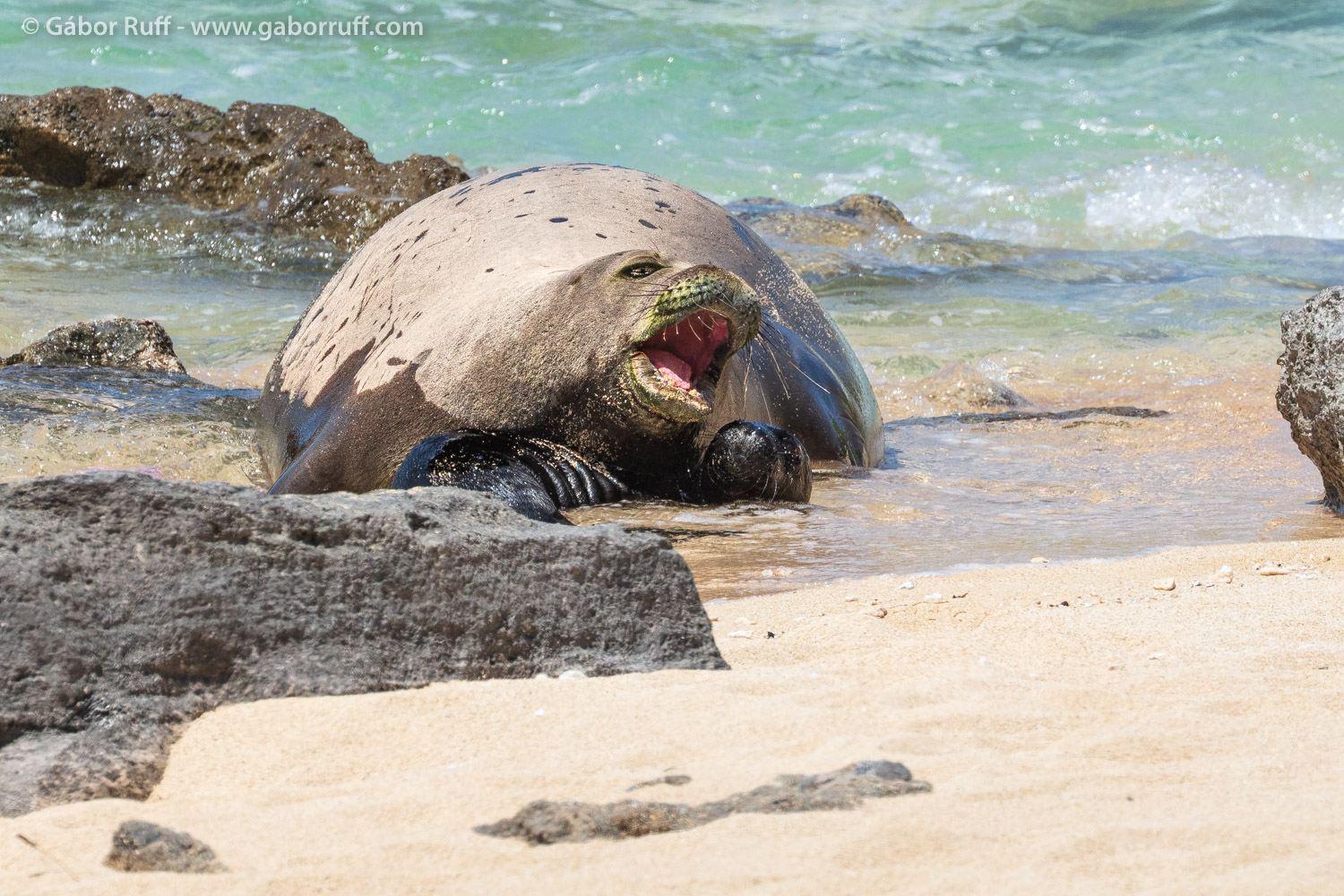
Lei Ola had given birth to her pup only three hours before these photographs were taken. To avoid disturbing the seals while still capturing detailed images, I used my Canon EOS 5Ds paired with my 100–400mm lens, allowing me to photograph them safely from afar.