Hawaii is famous for its stunning beaches, but its true treasure lies in its extraordinary wildlife and ecosystems. More than 90 percent of Hawaii’s native plants and animals are found nowhere else on Earth. At the same time, the islands are also known as the extinction capital of the world. The more developed an island became, the less native ecosystems remained. During our recent visit to the Big Island, the least altered island in the Hawaiian chain, we hoped to see some of its remarkable landscapes and wildlife.
Hawaii’s most fascinating animals are the Hawaiian honeycreepers, a group of birds endemic to the islands. They evolved from a single finch species that arrived millions of years ago. Over time, these birds adapted to different habitats and food sources, eventually diversifying into more than 50 species. Sadly, many have already disappeared, and the remaining species face serious threats from habitat loss, invasive predators, and introduced diseases. The most devastating of these is avian malaria, spread by non-native mosquitoes. Because mosquitoes are less common at higher elevations, most honeycreepers now survive only above 4,900 feet (1,500 meters). Fortunately, some species are showing signs of resilience. All three amakihis, for example, appear to have developed a degree of resistance to malaria and they are gradually returning to lower elevations. More than a decade ago, photographing an Oahu amakihi required considerable effort, but today the species is becoming increasingly common in lowland forests as well. Fortunately, it is much easier to see and photograph honeycreepers on the Big Island. It is the only island where seven species of Hawaiian honeycreepers can still be found.
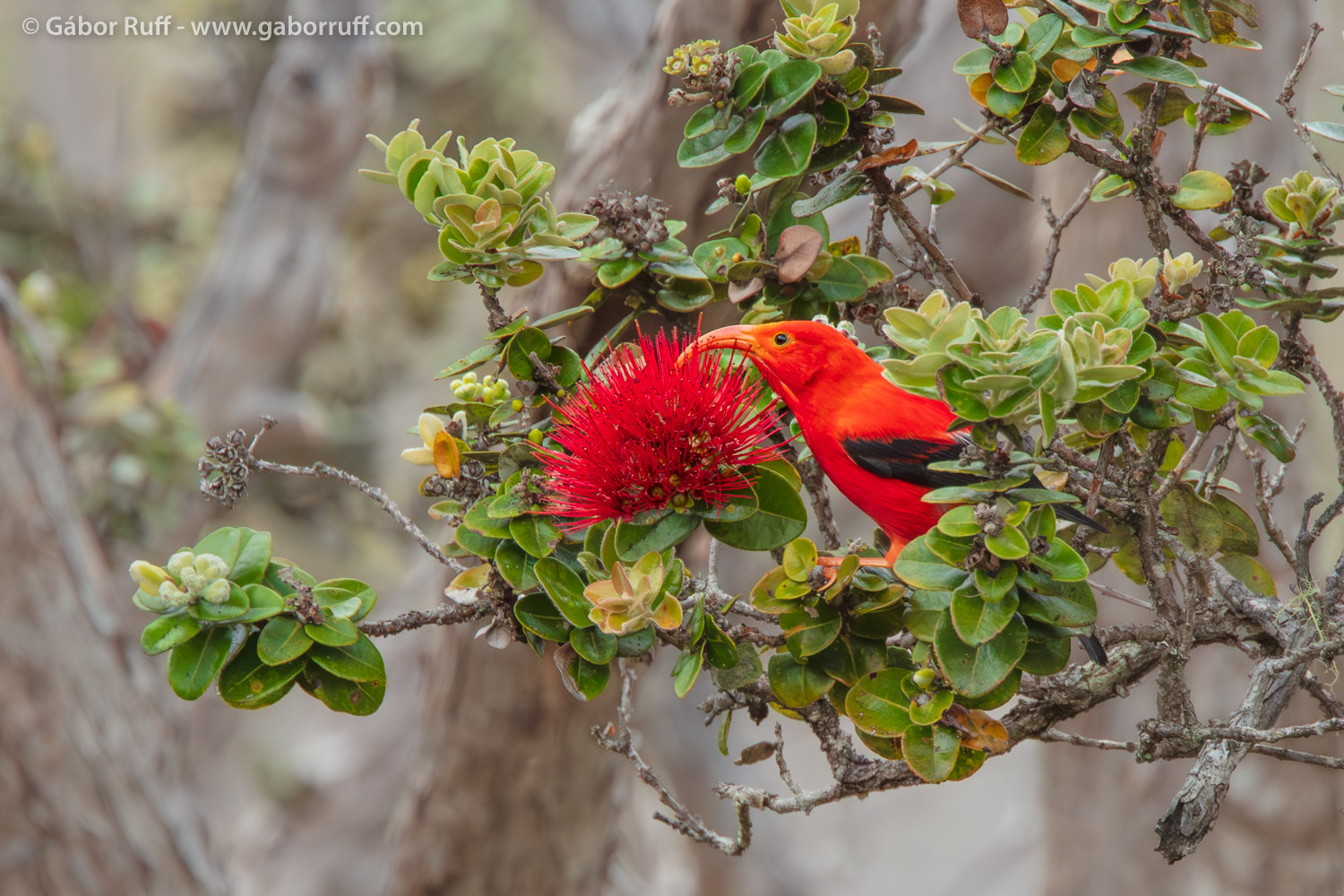
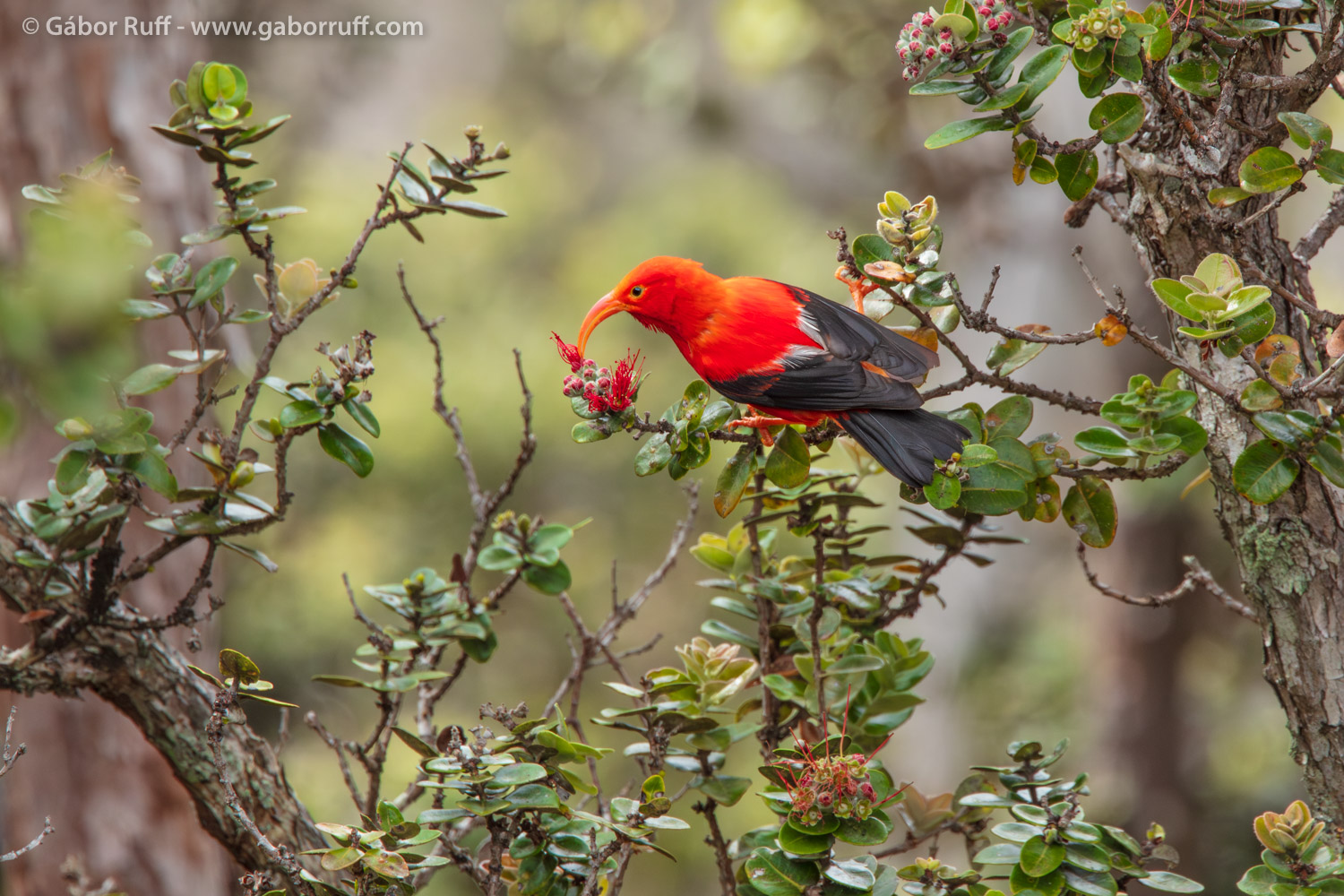
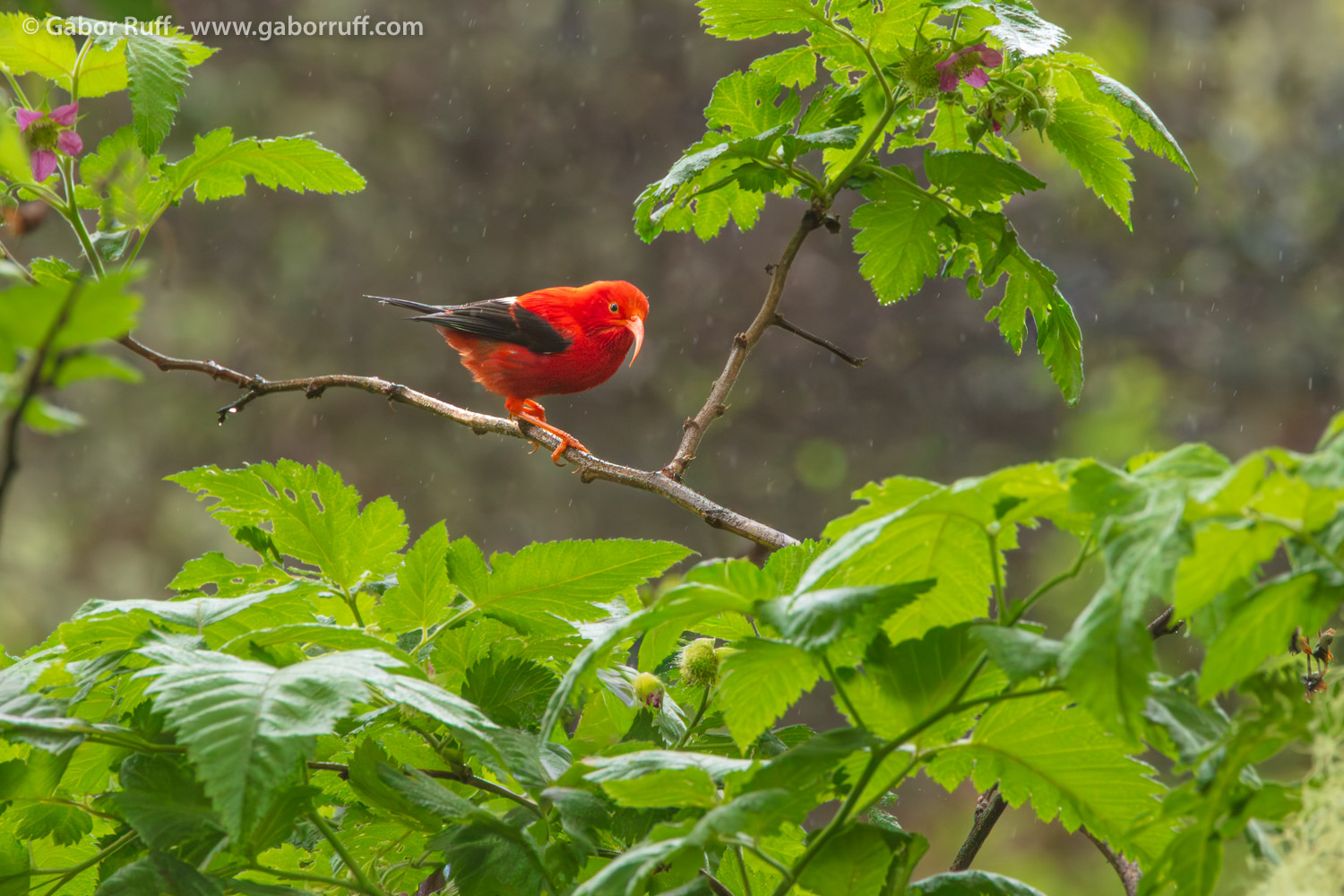
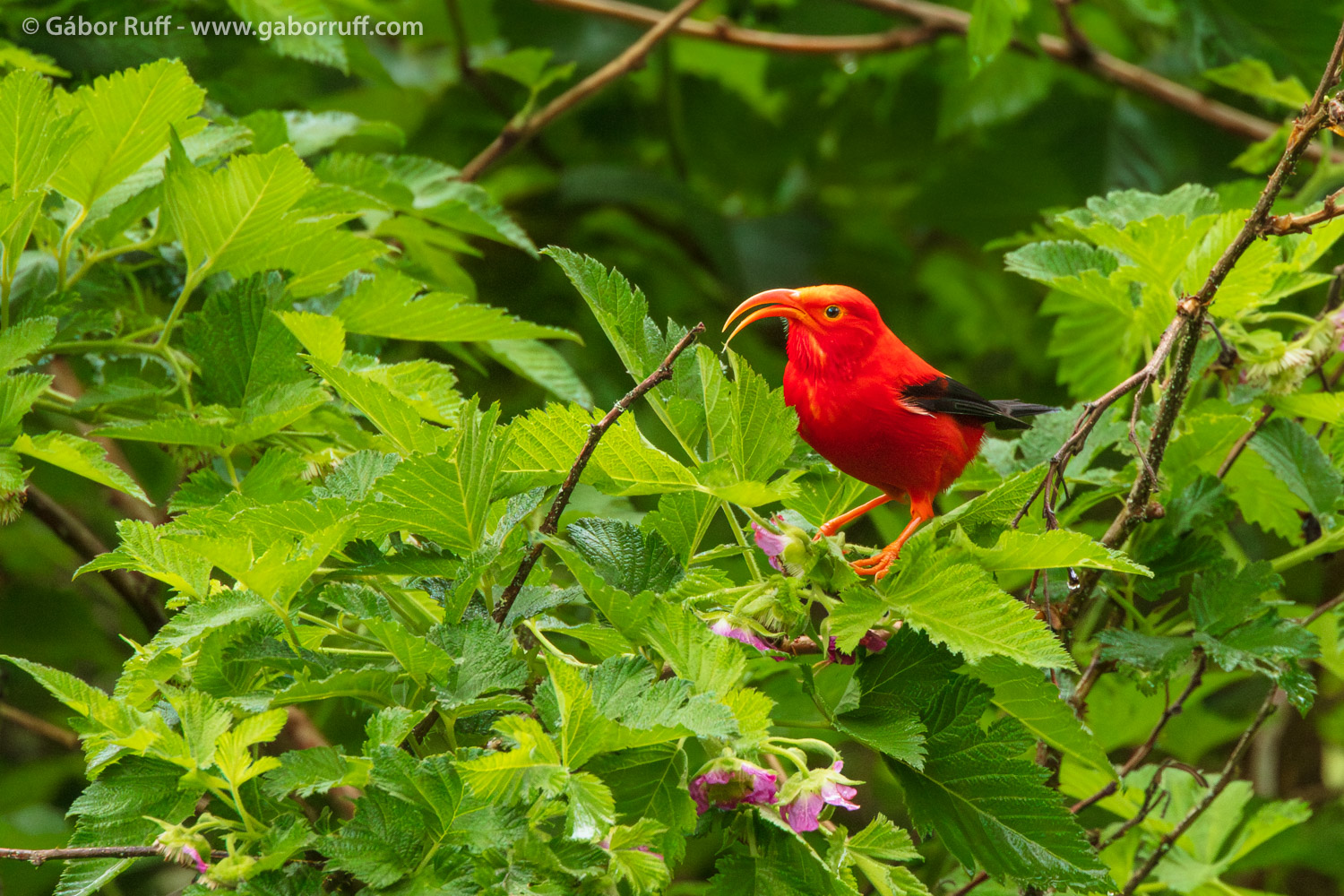
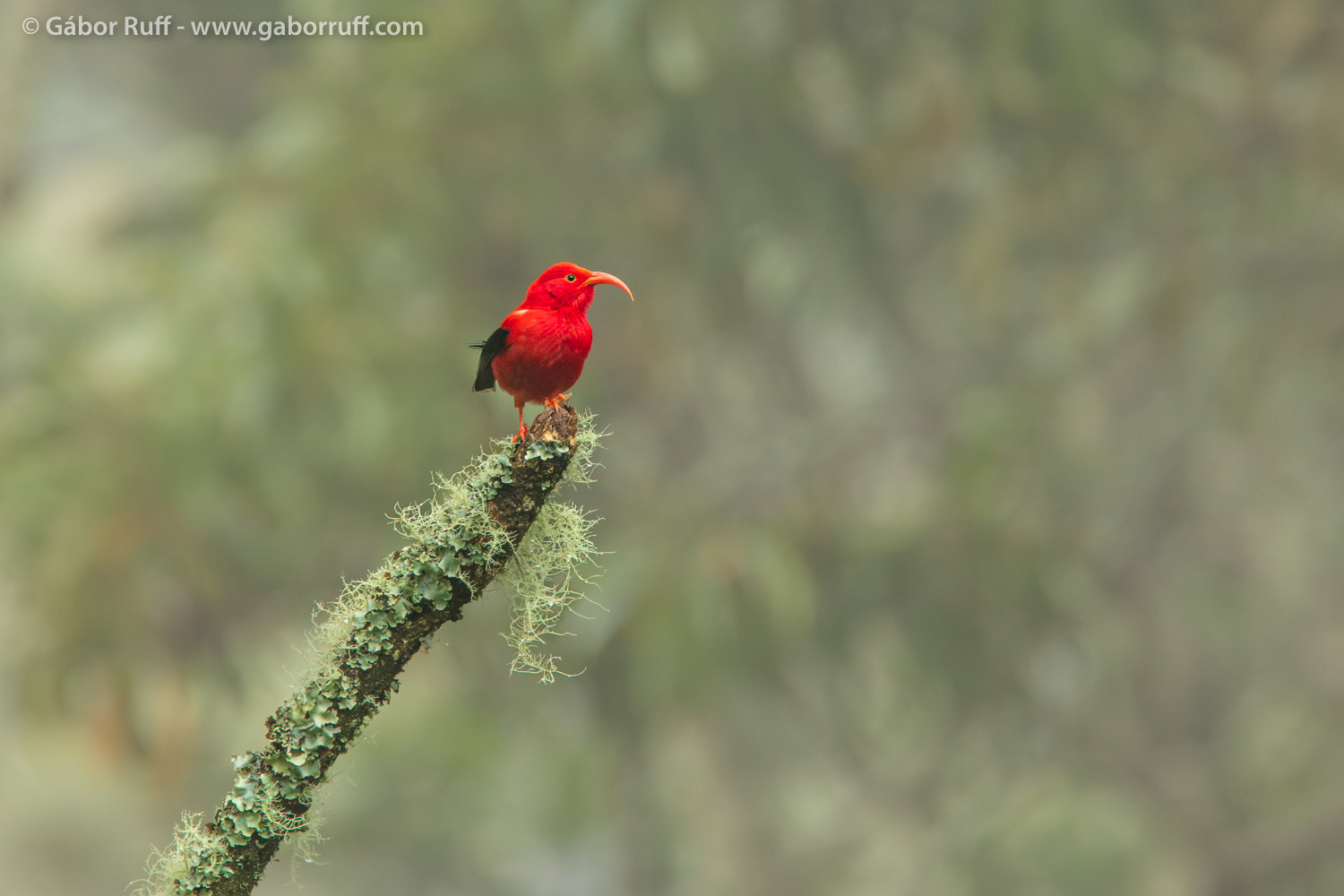
Several well-known birding locations offer excellent opportunities to observe these birds in the wild. One of these locations is the Puu Oo Trail (map). When we arrived, bright sunlight created difficult conditions for photography, so I put the camera aside and simply enjoyed the experience. The forest was alive with common amakihis, apapanes, and iiwis moving through the canopy. Another great location was the Kaulana Manu Trail (map), where I finally managed to photograph one of my favorite birds in the world: the iiwi, also known as the scarlet honeycreeper (Drepanis coccinea). With its vivid red plumage and long curved bill perfectly adapted for feeding on nectar, the iiwi is one of Hawaii’s most iconic birds.
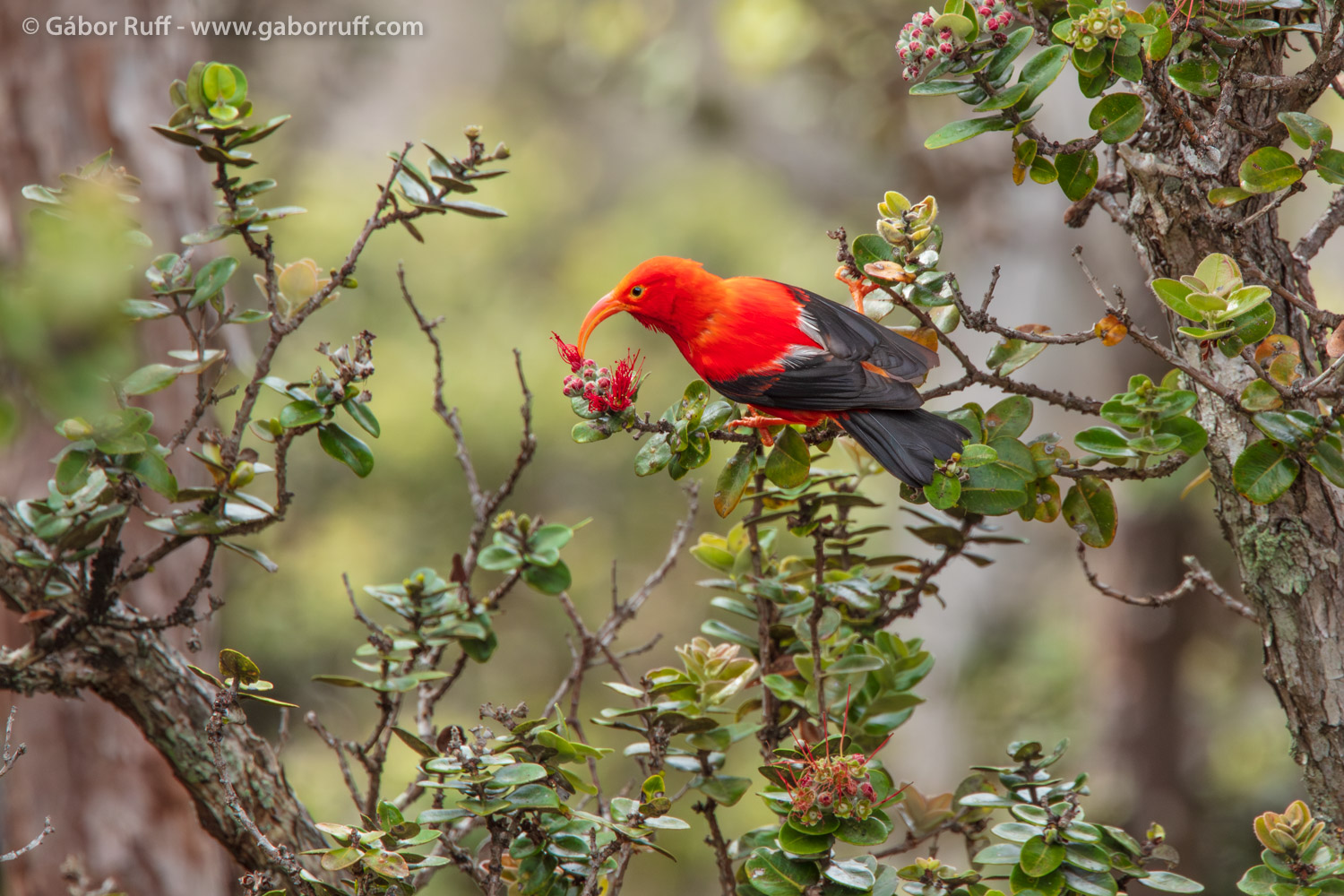
The apapane (Himatione sanguinea) is the most widespread honeycreeper species and, like the iiwi, can still be found on almost all of the main Hawaiian Islands. Despite seeing and hearing them everywhere, I was unable to capture a truly satisfying photo of an apapane. Most birds remained high in the canopy or harsh lighting conditions made it difficult to take nice images. Even so, they were still exciting to watch. Like the iiwi, the apapane feeds primarily on nectar.
The finest place to observe Hawaii’s native forest birds is the Hakalau Forest National Wildlife Refuge (map). Located on the eastern slopes of Mauna Kea, this 38,000-acre rainforest sanctuary protects one of the most important remaining tracts of native Hawaiian montane wet forest. Towering koa and ohia trees dominate the landscape, creating habitat for some of the rarest birds in the world. Because the refuge is closed to the general public, access is limited to guided tours. We were fortunate to visit with renowned biologist and birding guide Jack Jeffrey, who has spent more than 50 years studying and photographing Hawaii’s native birds. As a former biologist for Hakalau Forest NWR, Jack shared invaluable insight into the region’s ecology, history, and ongoing conservation efforts.
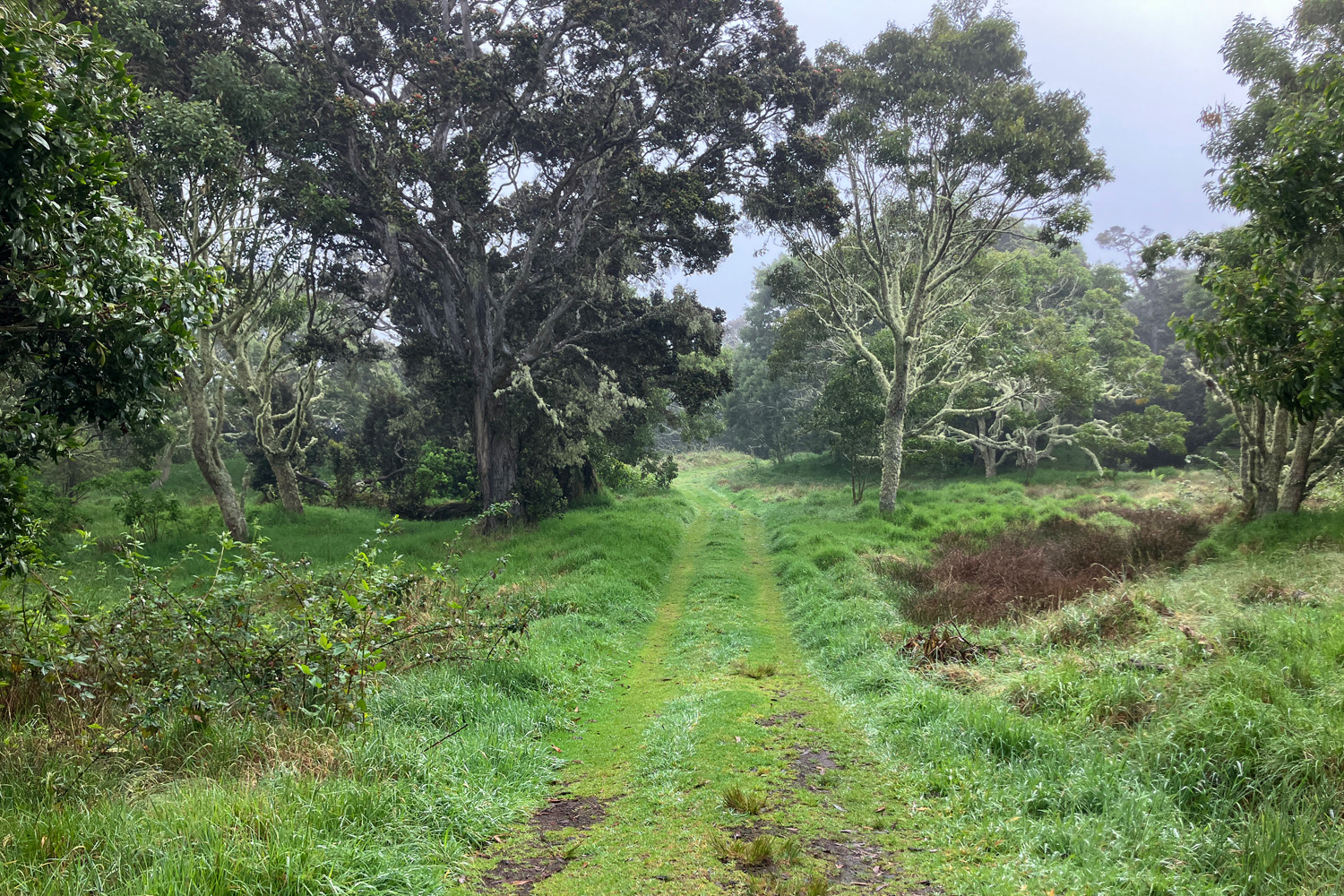
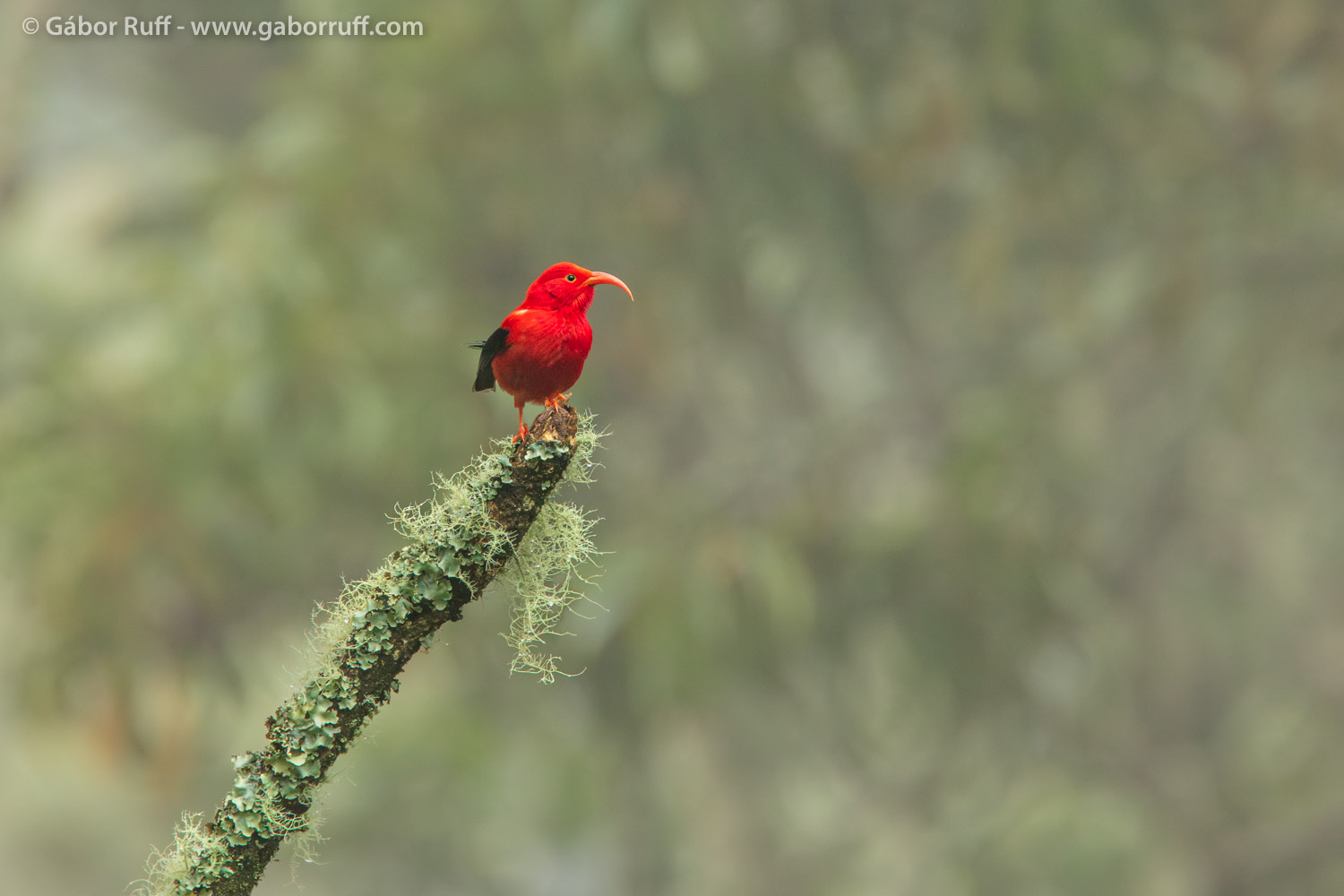
The refuge is home to six species of Hawaiian honeycreepers, along with several other native forest birds. Exploring the forest in pouring rain was challenging, but thanks to Jack’s expertise, we managed to see every target species. The overcast conditions also provided ideal lighting for photography. The iiwi was the bird we encountered most often, and I captured countless images of this extraordinary species. One of my favorite photographs shows an iiwi perched confidently in the rainforest, almost like the ruler of the forest itself. As we learned, iiwis do indeed like to bully other birds around them. Despite its aggressive behavior toward other birds, the iiwi remains my favorite bird in the world.
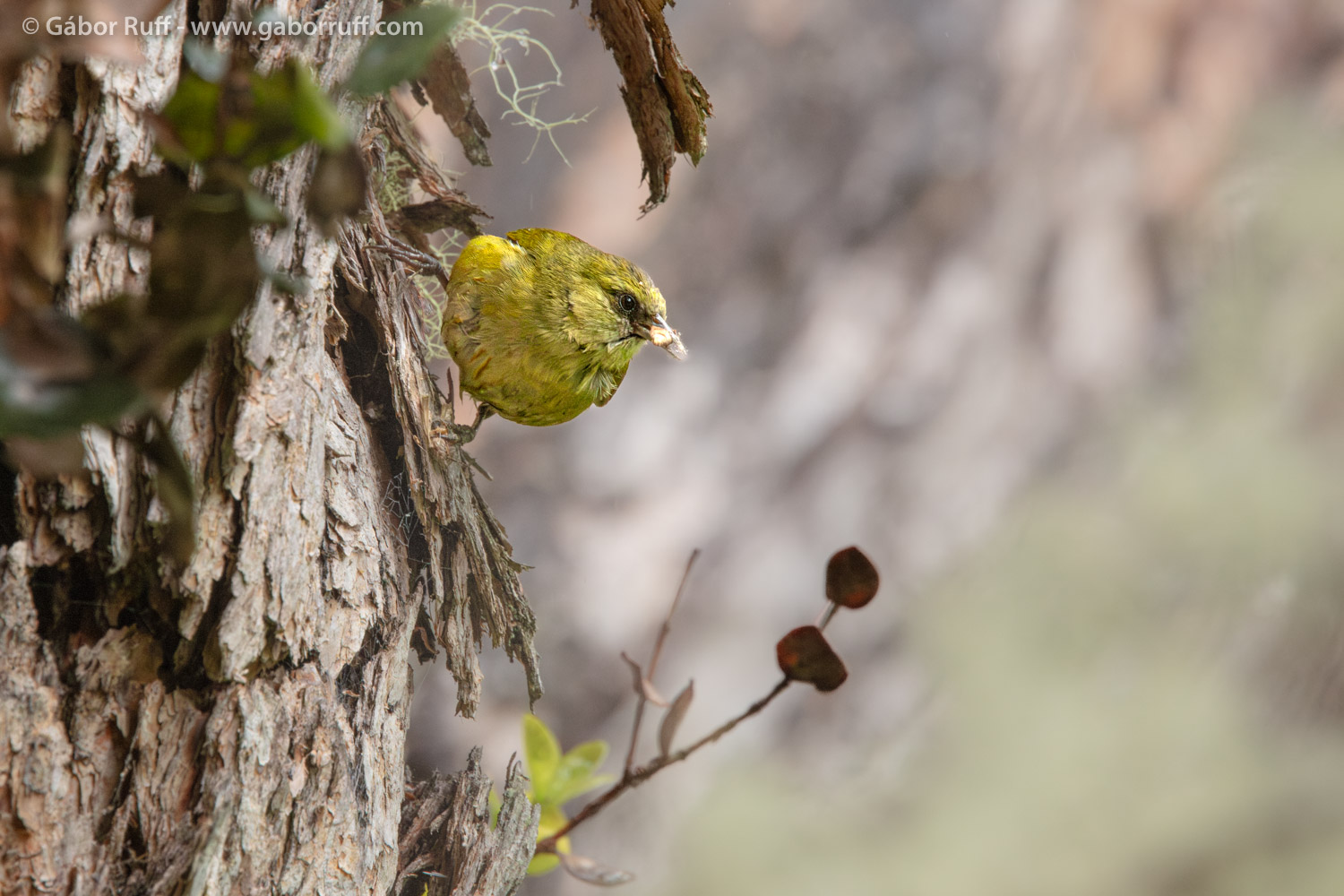
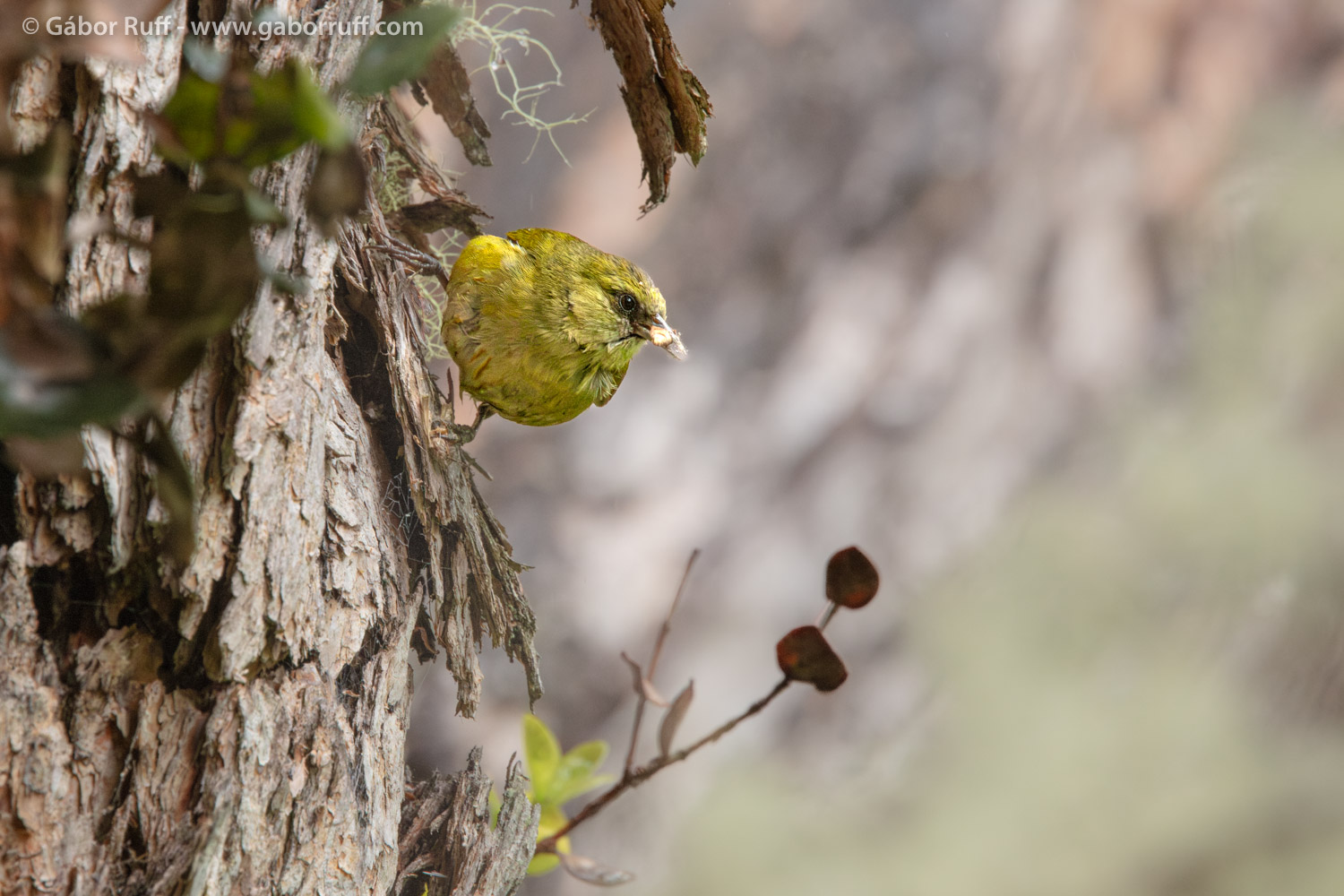
Another remarkable species we encountered was the alawi, or Hawaii creeper (Loxops mana), an endangered honeycreeper found only on the Big Island. This olive-green bird creeps up and down along tree trunks and branches, searching bark crevices for insects with its slightly curved bill. I was fortunate enough to photograph one as it pulled a large insect from the bark of an ohia lehua tree (Metrosideros polymorpha).
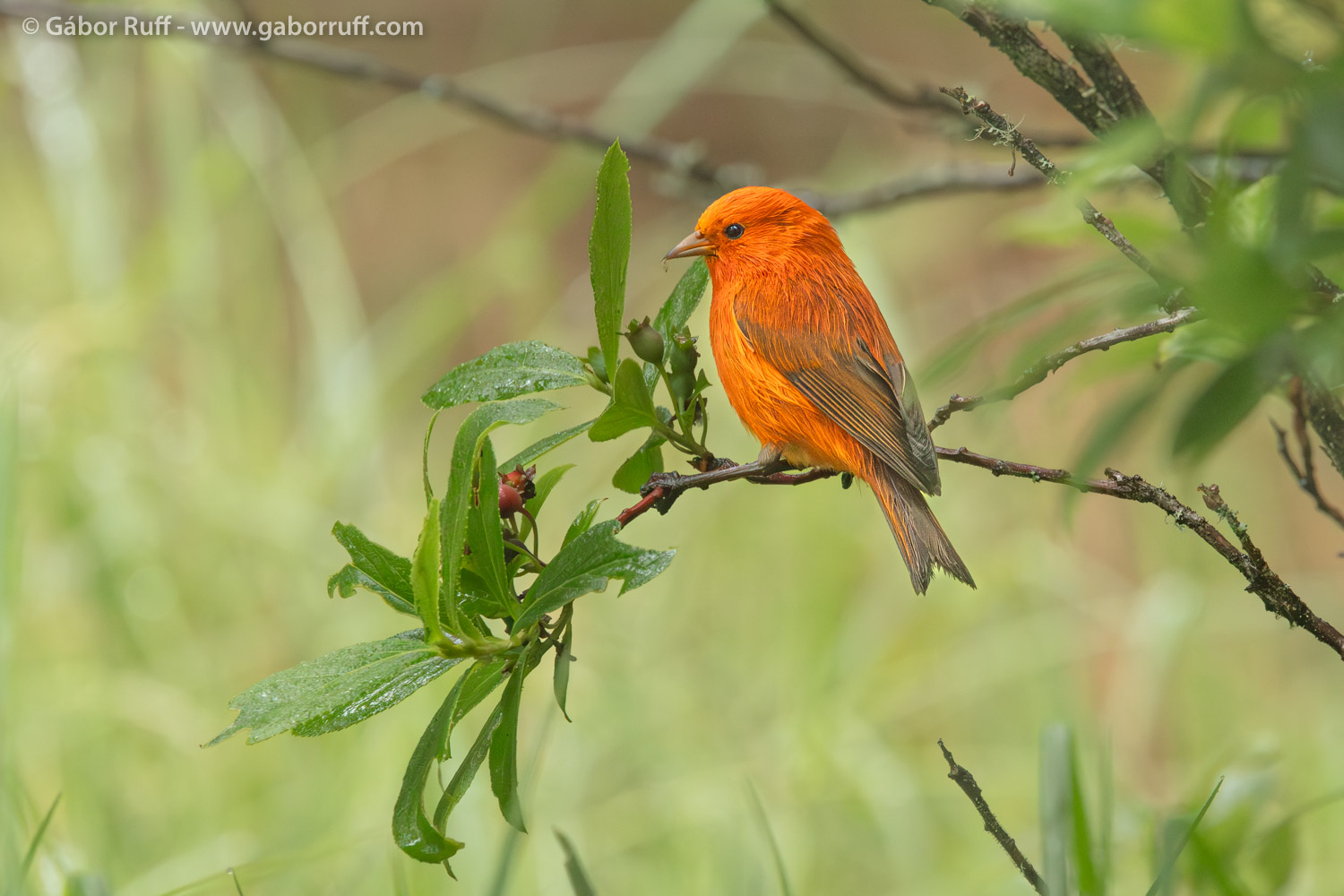
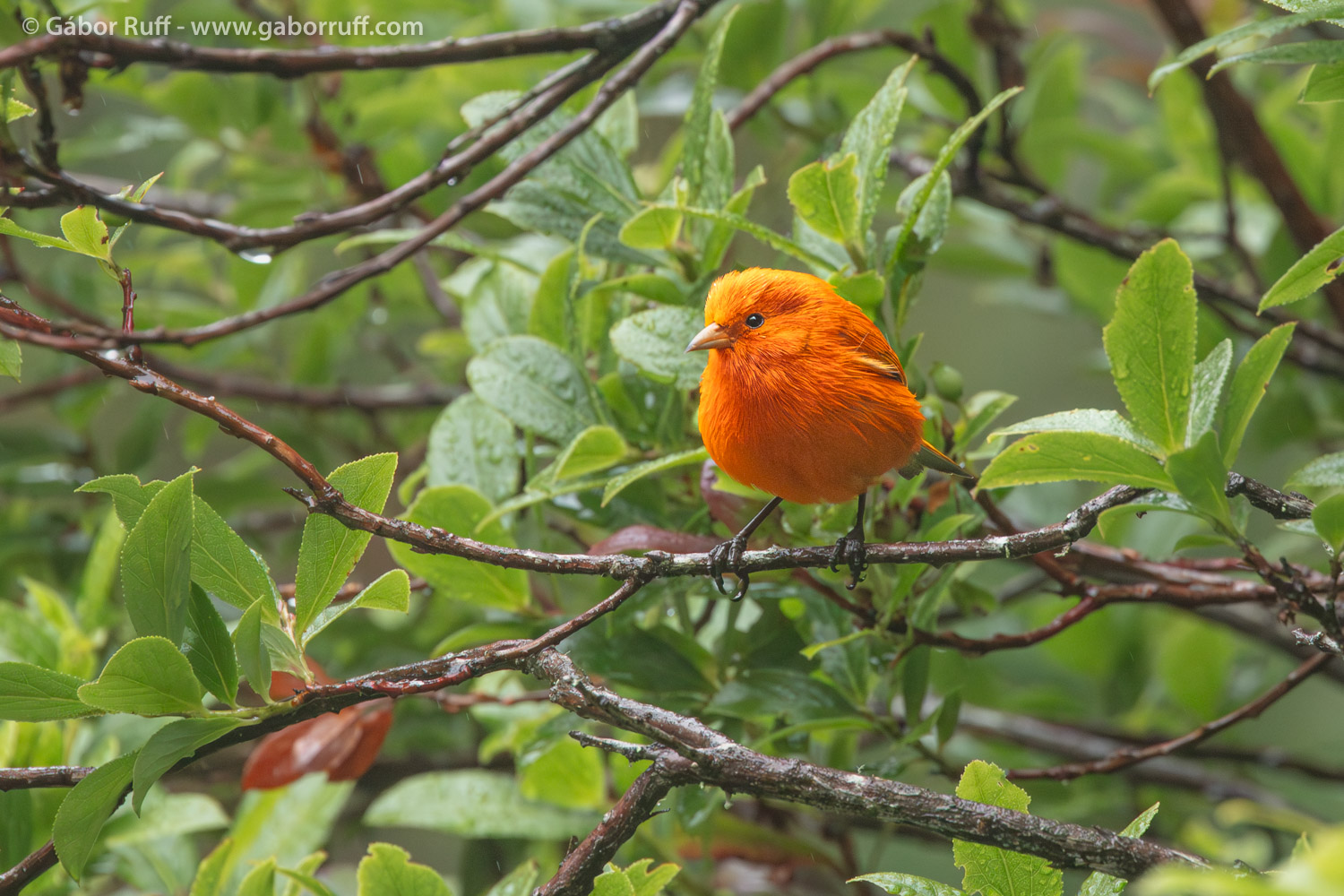
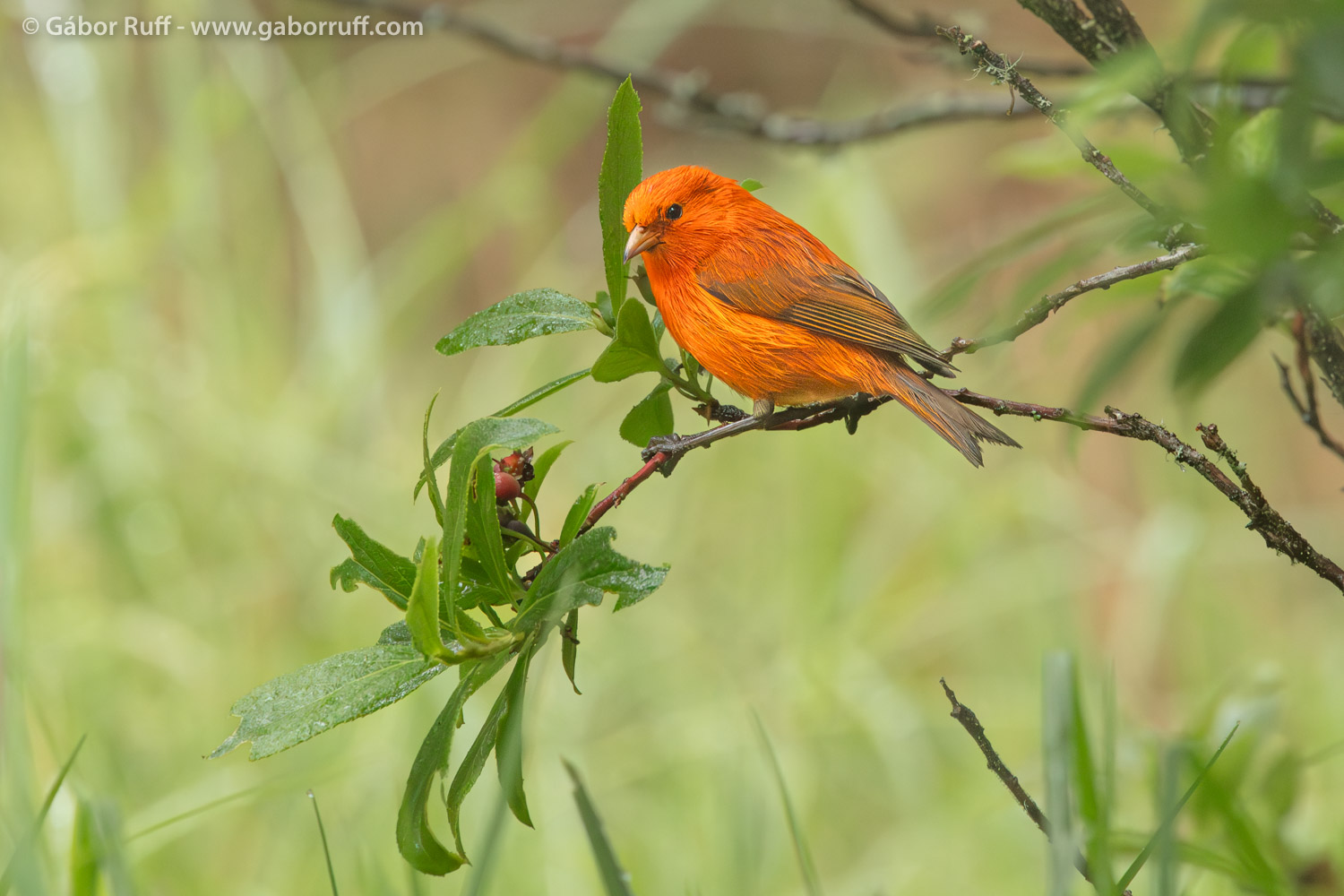
One of the rarest birds on Earth is the endangered Hawaii akepa (Loxops coccineaus). Endemic to the Big Island, its strongest remaining population survives within Hakalau Forest. The akepa feeds on insects and spiders hidden among the leaves and flowers at the tops of koa and ohia trees. Its slightly crossed bill allows it to pry open leaf buds in search of prey. Because it nests in cavities found only in large, mature trees, the species depends heavily on old-growth forest habitat. Photographing an akepa is very difficult because the birds spend most of their time high in the canopy. However, we experienced an extraordinary moment when a brilliant male descended to forage in an ohelo shrub (Vaccinium reticulatum) only a few feet away from us. It was undoubtedly one of the highlights of the trip.
Another extremely rare honeycreeper is the akiapolaau (Hemignathus wilsoni), often shortened simply to “aki.” This endangered bird has one of the most specialized bills in the avian world. Its lower bill is short and sturdy, allowing it to chisel into koa bark (Acacia koa) much like a woodpecker, while its long curved upper bill extracts insect larvae hidden beneath the surface. Finding an akiapolaau requires patience, skill, and luck. Guided by Jack, we hiked through dense, rain-soaked forest while listening carefully for its call. Eventually, our persistence paid off when we spotted a young bird high in the canopy. The conditions made photography nearly impossible, as raindrops covered even my binocular lenses as I watched the aki, but simply seeing such a rare and extraordinary bird was unforgettable.
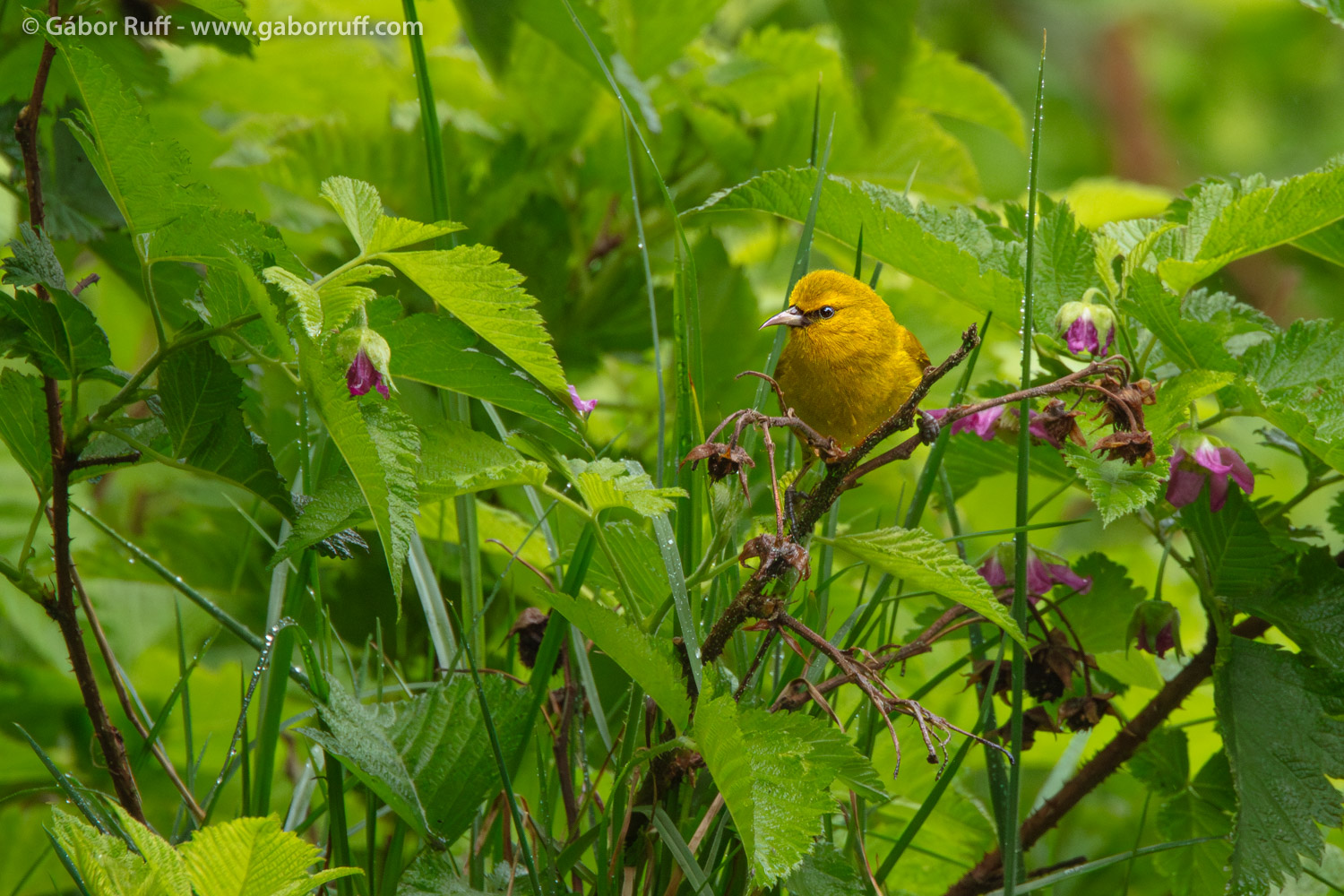
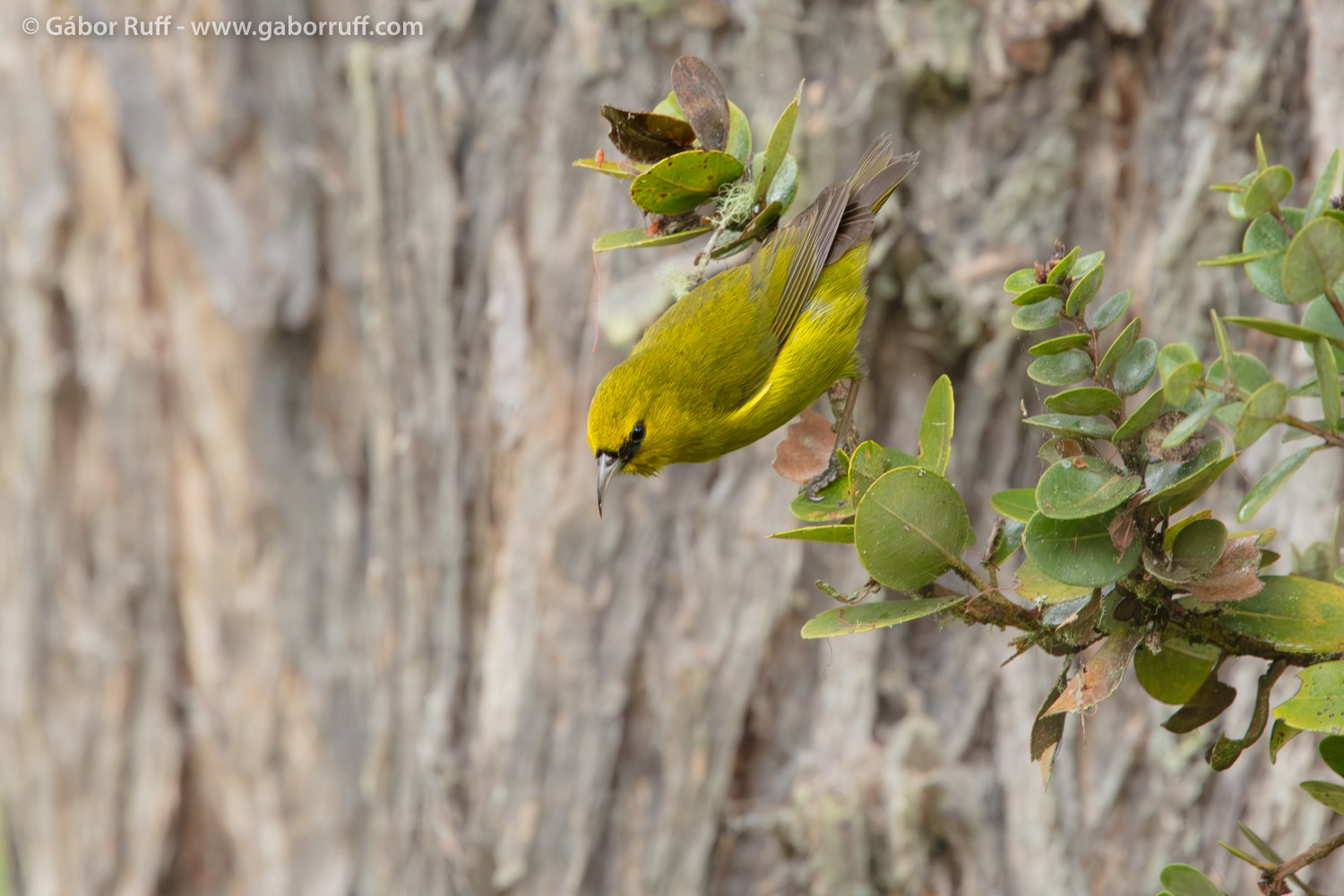
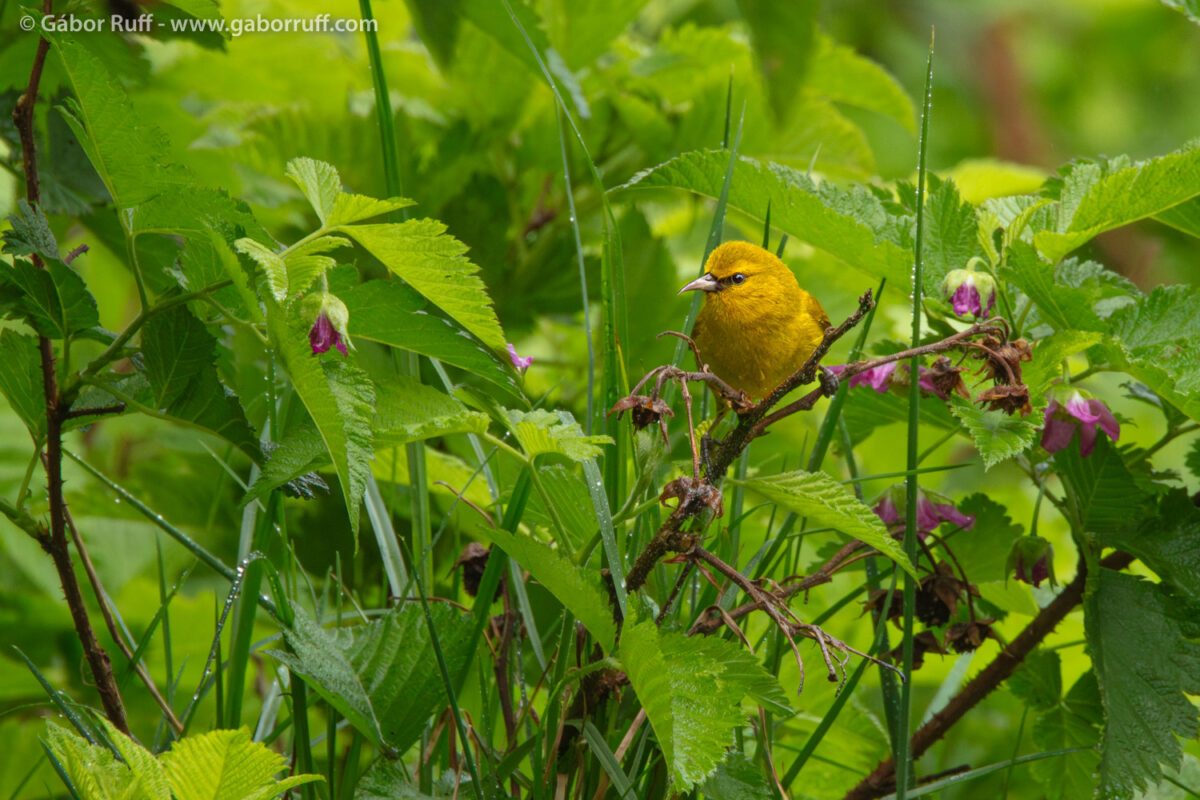
The common amakihi (Chlorodrepanis virens) is a relatively widespread honeycreeper found on the Big Island, Maui, and Molokai. It closely resembles the other two amakihi species, the Oahu amakihi and the Kauai amakihi. Amakihis have a varied diet and use their tubular tongues to feed on nectar, while also foraging for spiders and insects. We encountered many amakihis, and I was especially excited to photograph several stunning bright yellow males.
We also encountered a few other species beyond the honeycreepers, such as the omao (Myadestes obscurus). This berry-eating bird, also known as the Hawaiian thrush, is endemic to the Big Island. We also saw the Hawaii elepaio (Chasiempis sandwichensis), a monarch flycatcher. As its name suggests, this insect-eating bird can only be found on Hawaii Island as well. Here you can find photos of the bird species I mentioned but didn’t manage to photograph, along with many other great images from the Hawaiian Islands.
The only honeycreeper on the Big Island that we didn’t see was the critically endangered palila (Loxioides bailleui). This bird is found exclusively in the native dry forests on the western slopes of Mauna Kea volcano, an area we didn’t have time to visit.
Watching and photographing honeycreepers and other endemic birds in the native forests of the Big Island was one of the highlights of our trip to Hawaii. The gallery below features my favorite bird photos from this trip. To capture these images, I used a handheld Canon EOS 5Ds camera paired with a Canon 100-400mm lens and a 1.4x extender for additional reach. Even with that setup, significant cropping was often necessary, because the birds are small and rarely allow close approach. The super high-resolution sensor of this older DSLR, therefore, continues to prove invaluable for my wildlife photography.