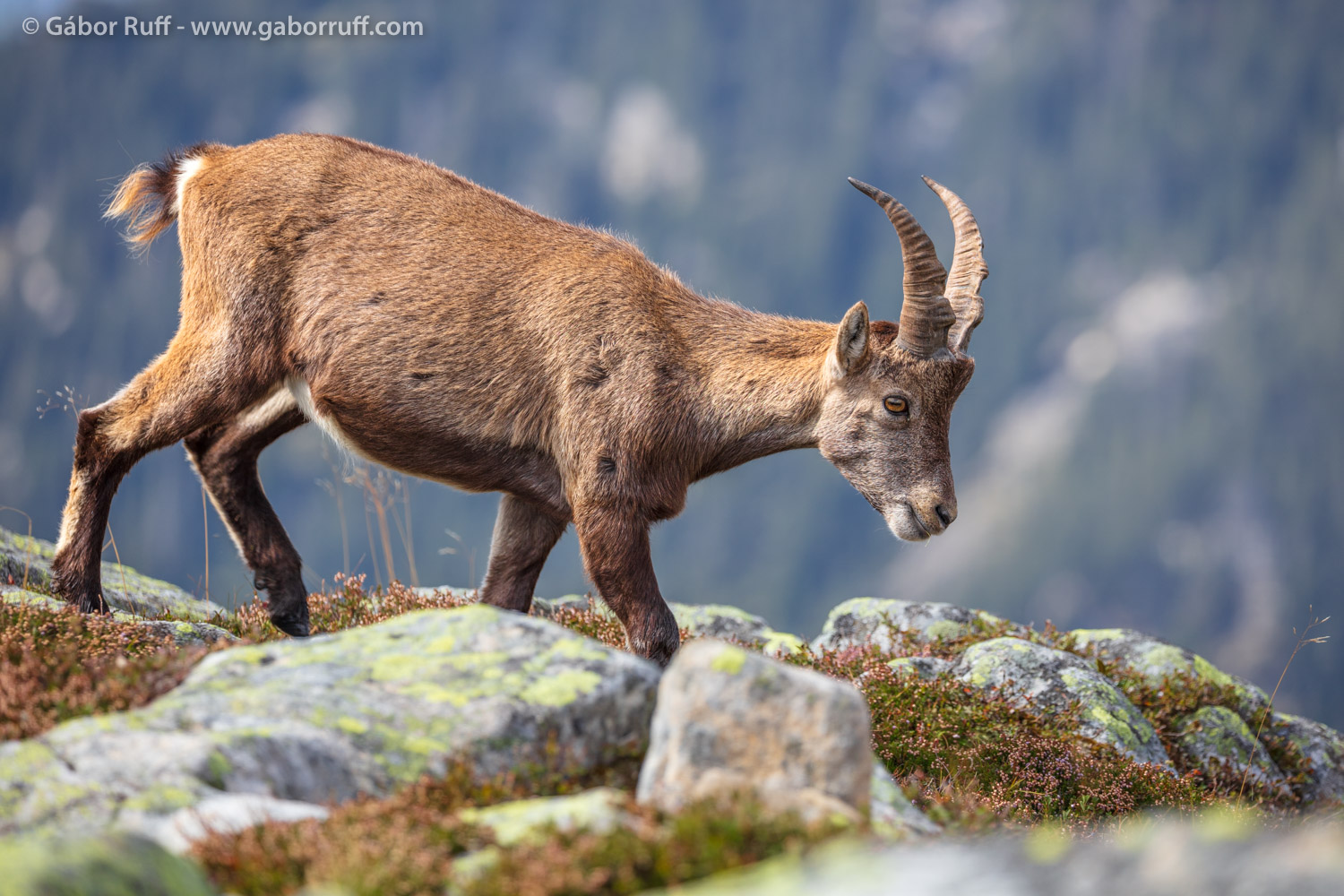
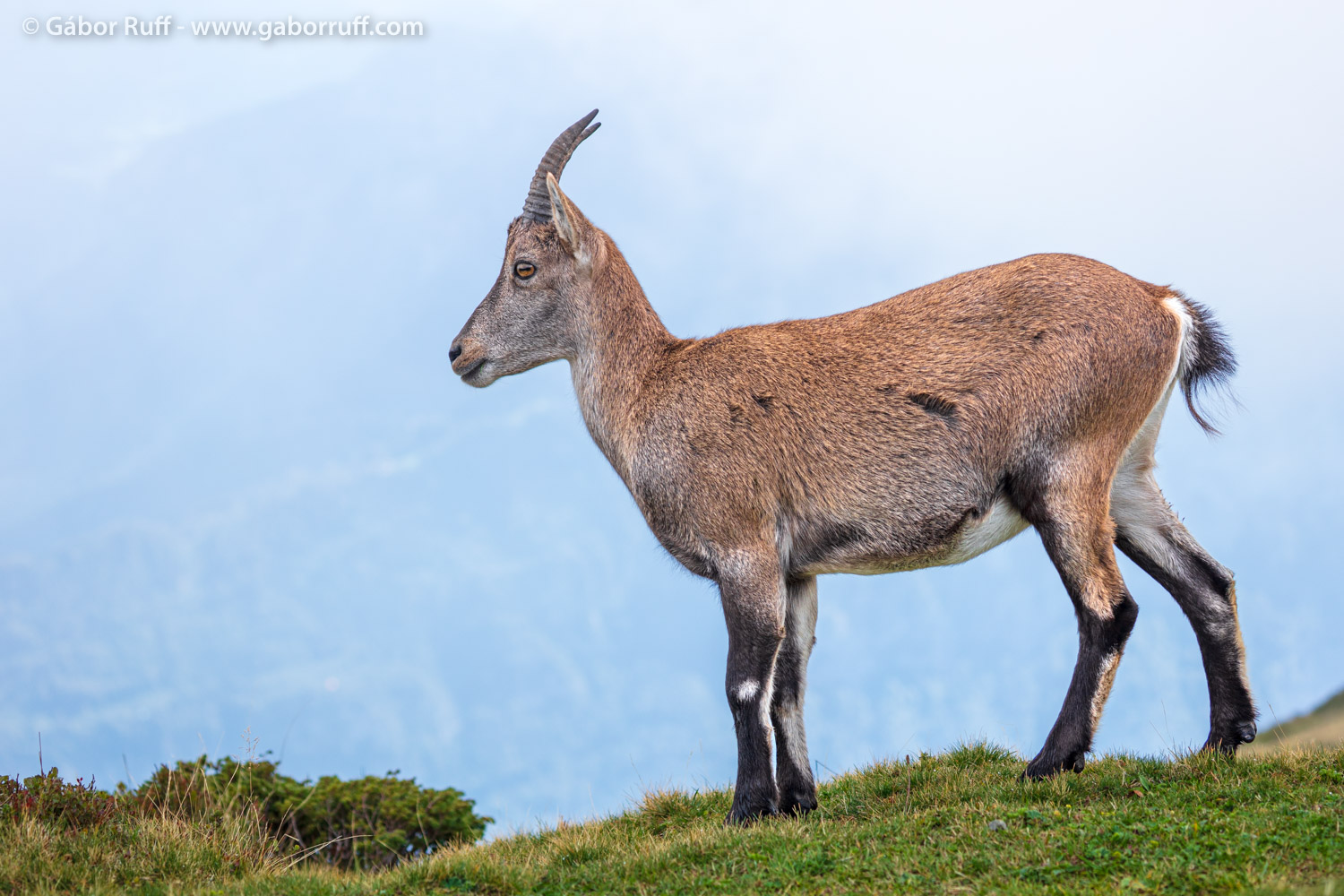
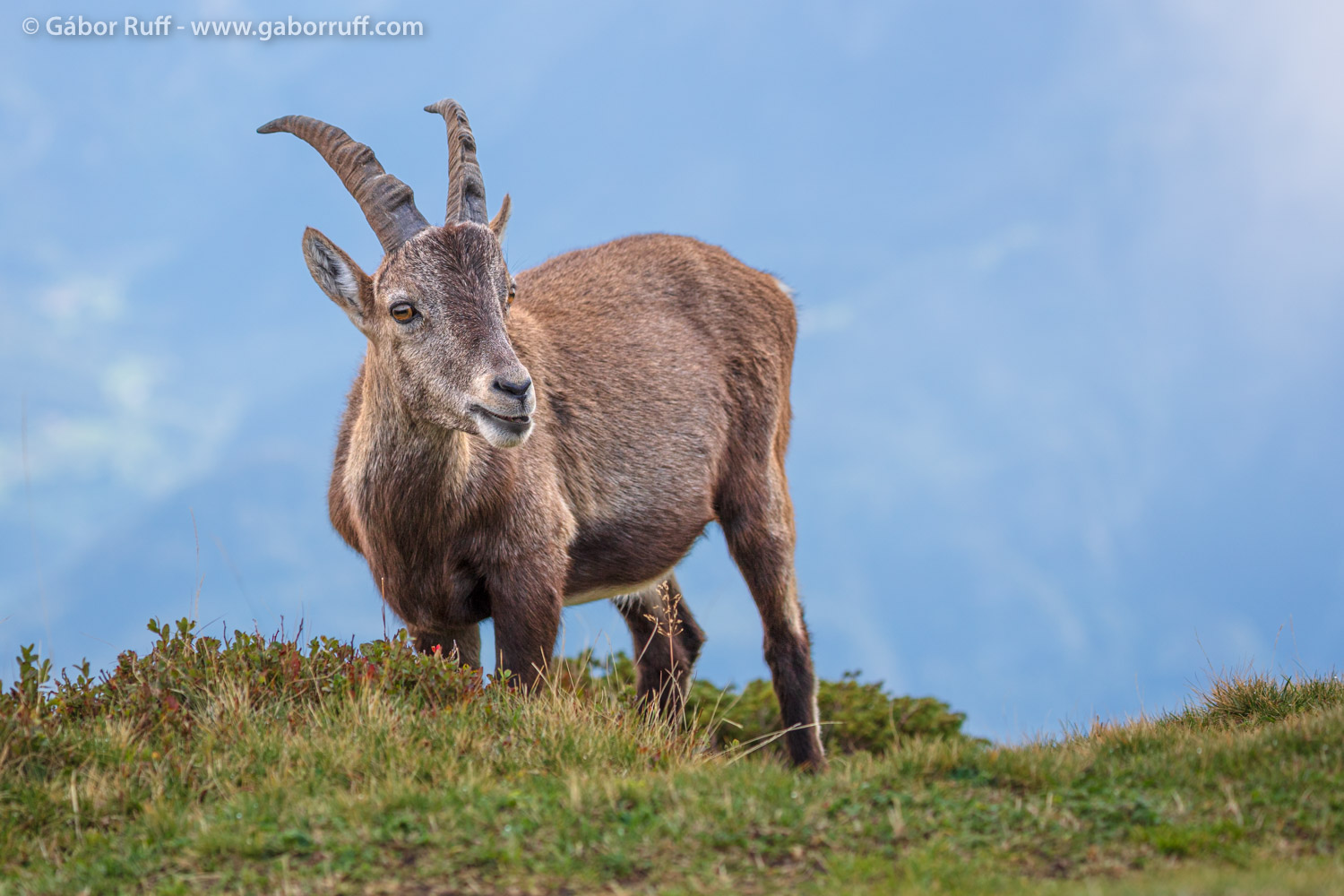
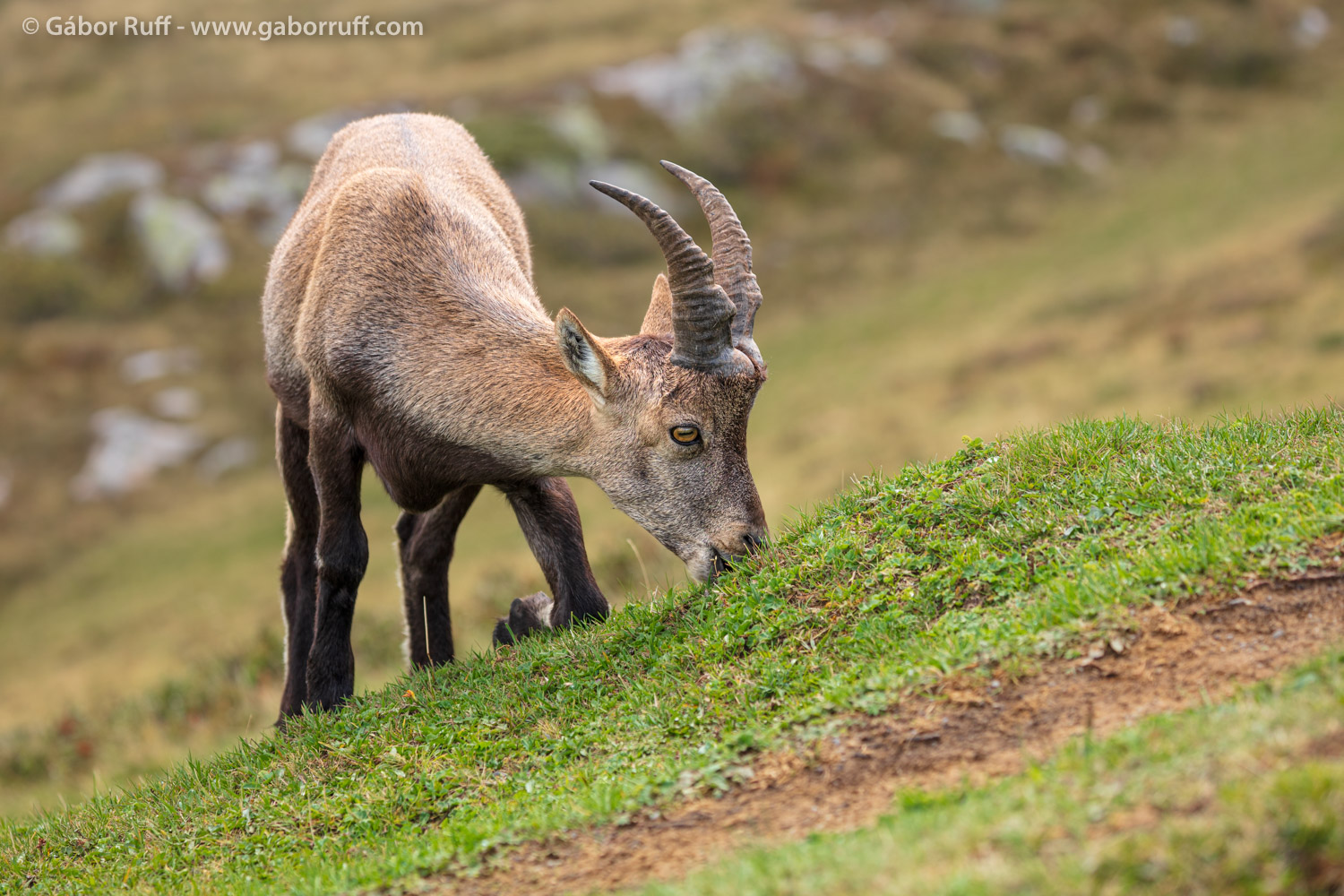
In mid-September, Gabi and I returned to Switzerland. Gabi had a conference in Zurich, while I had a different destination in mind. I wanted to return to the Bernese Oberland with one goal in mind: photographing the alpine ibex (Capra ibex). On my previous visits, the Niederhorn (map) had proved to be one of the best places to find them, so I decided to try my luck there again. I took the gondola to the summit, giving me more time to explore the ridge, enjoy the magnificent panorama of the Alps, and search for the ibex. I didn’t have to wait long. After only about 15 minutes on the trail, I spotted a small group of ibexes.
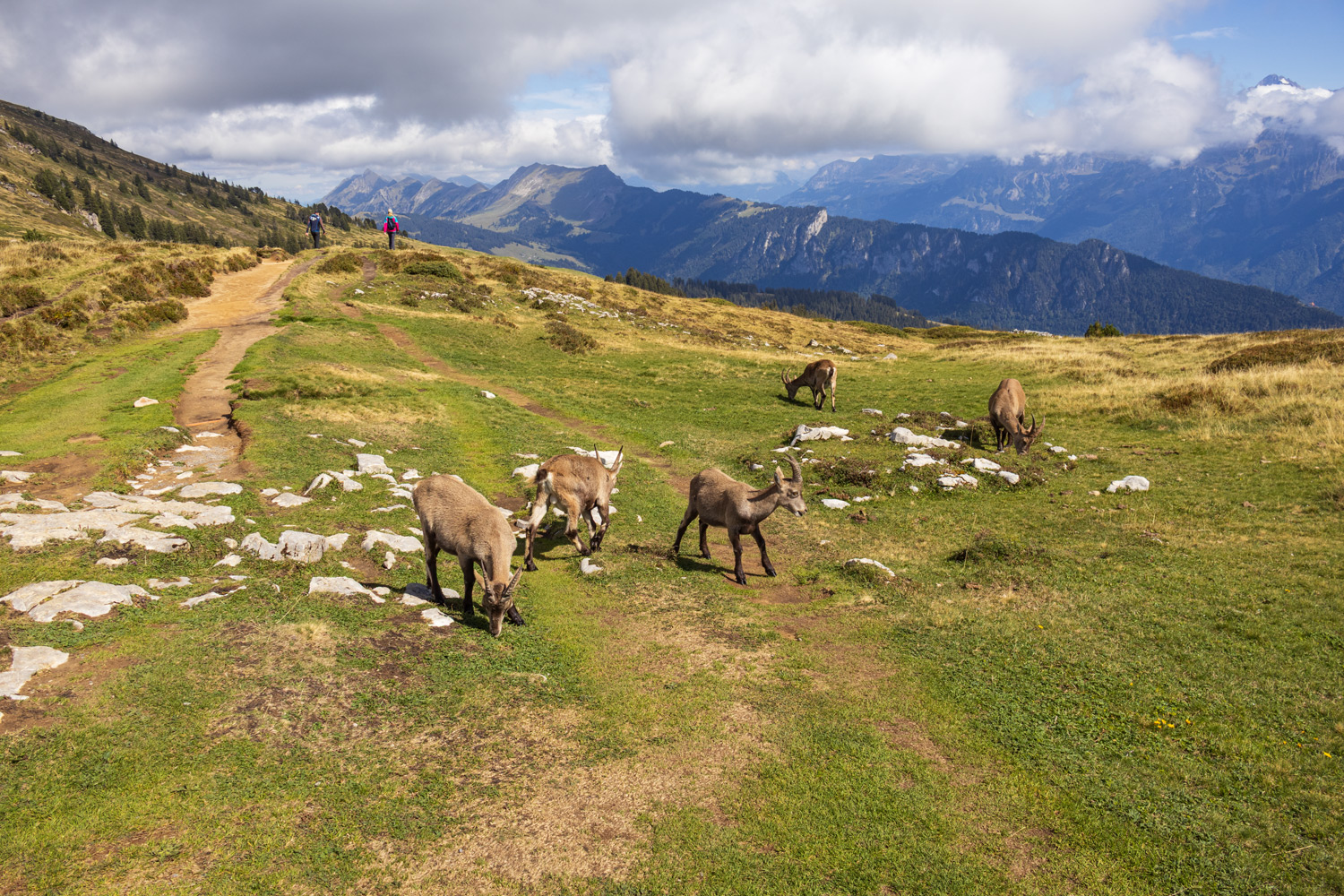
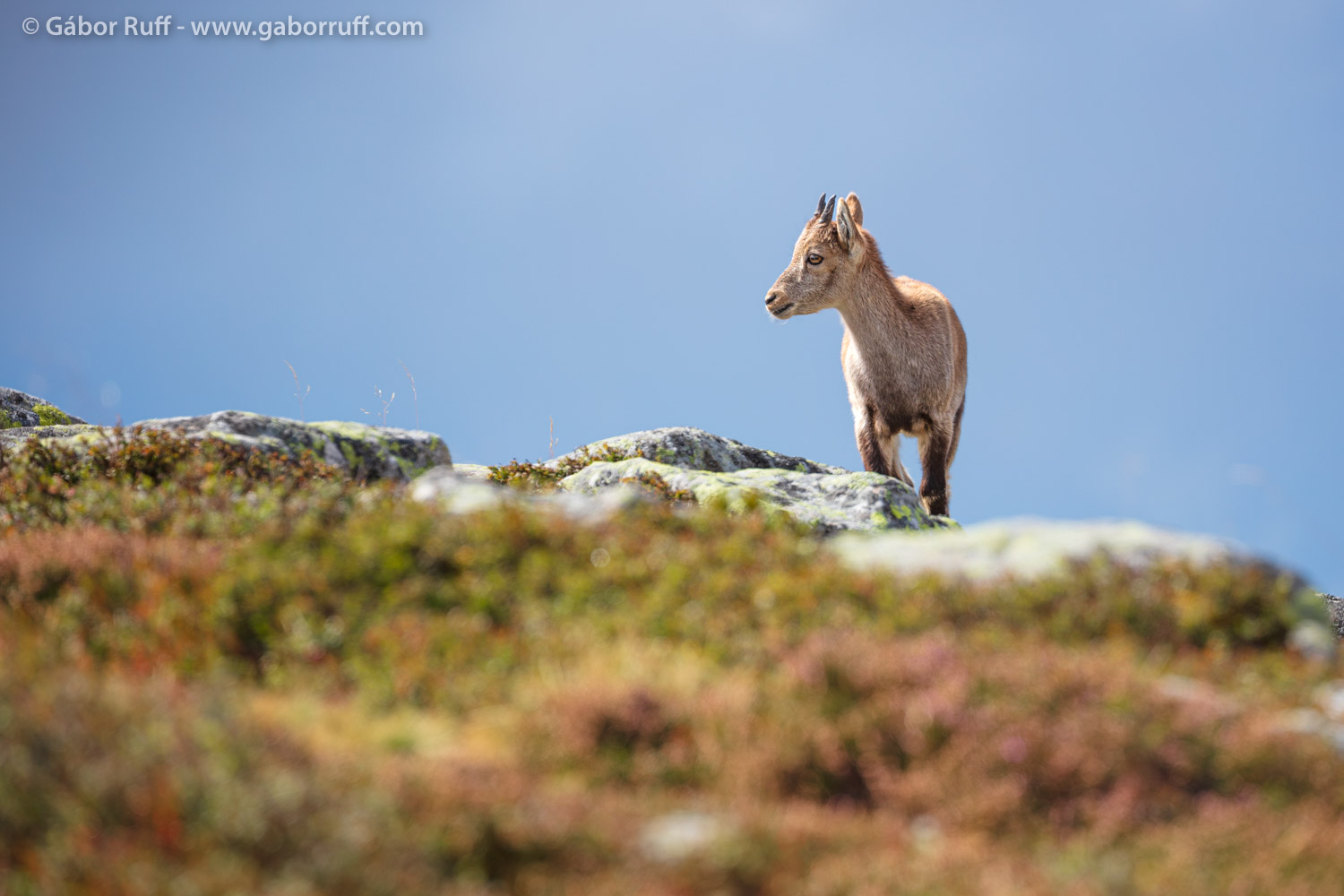
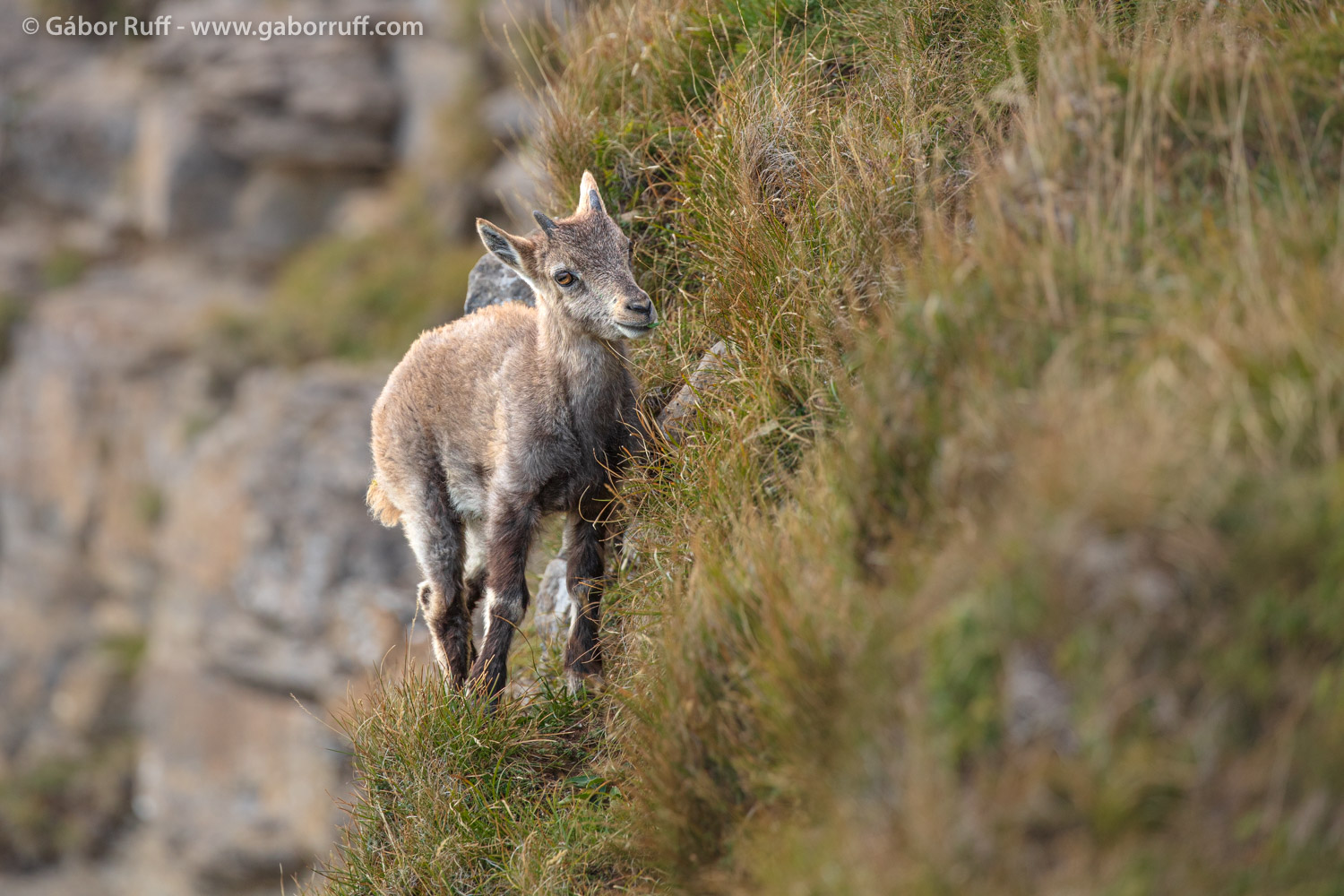
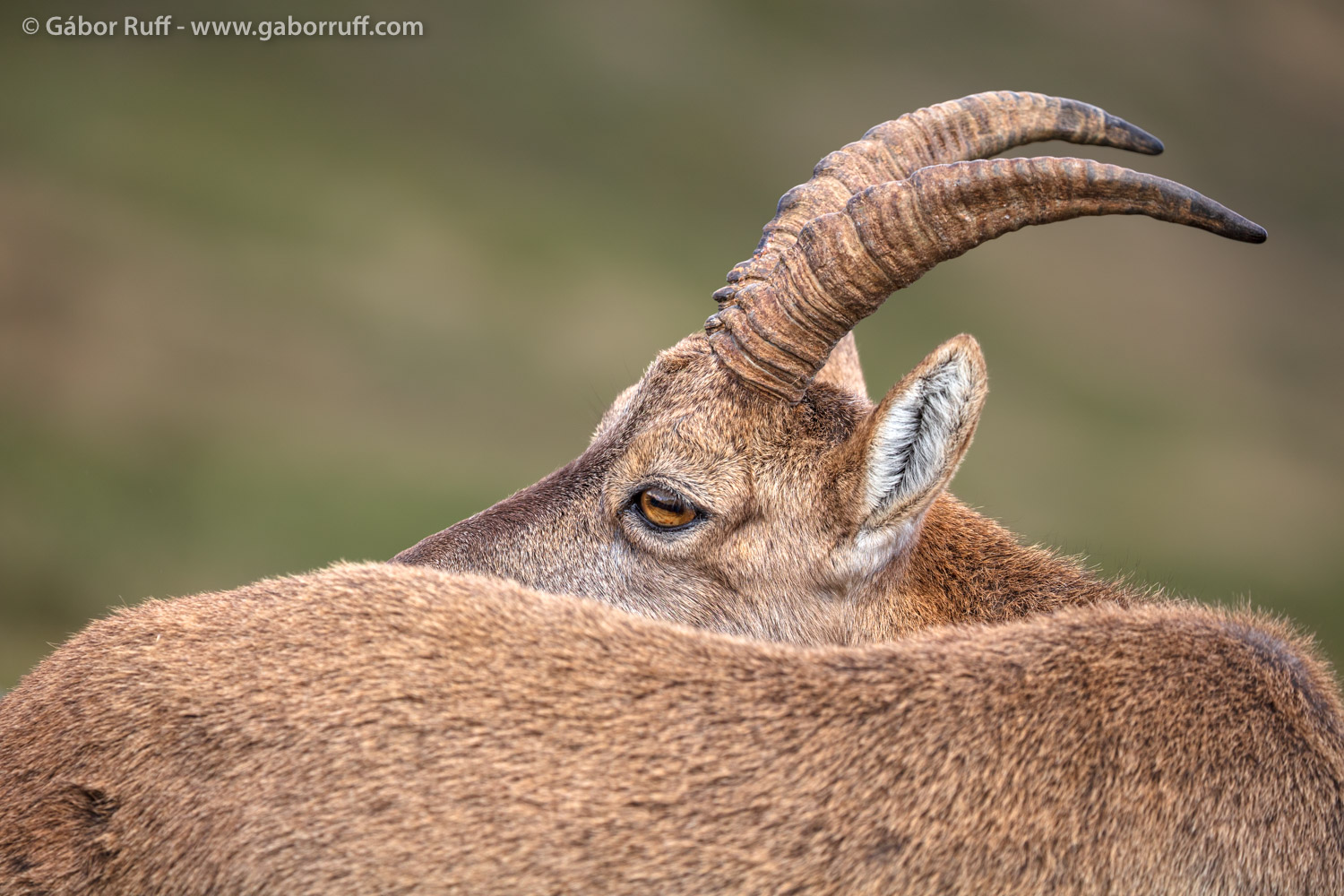
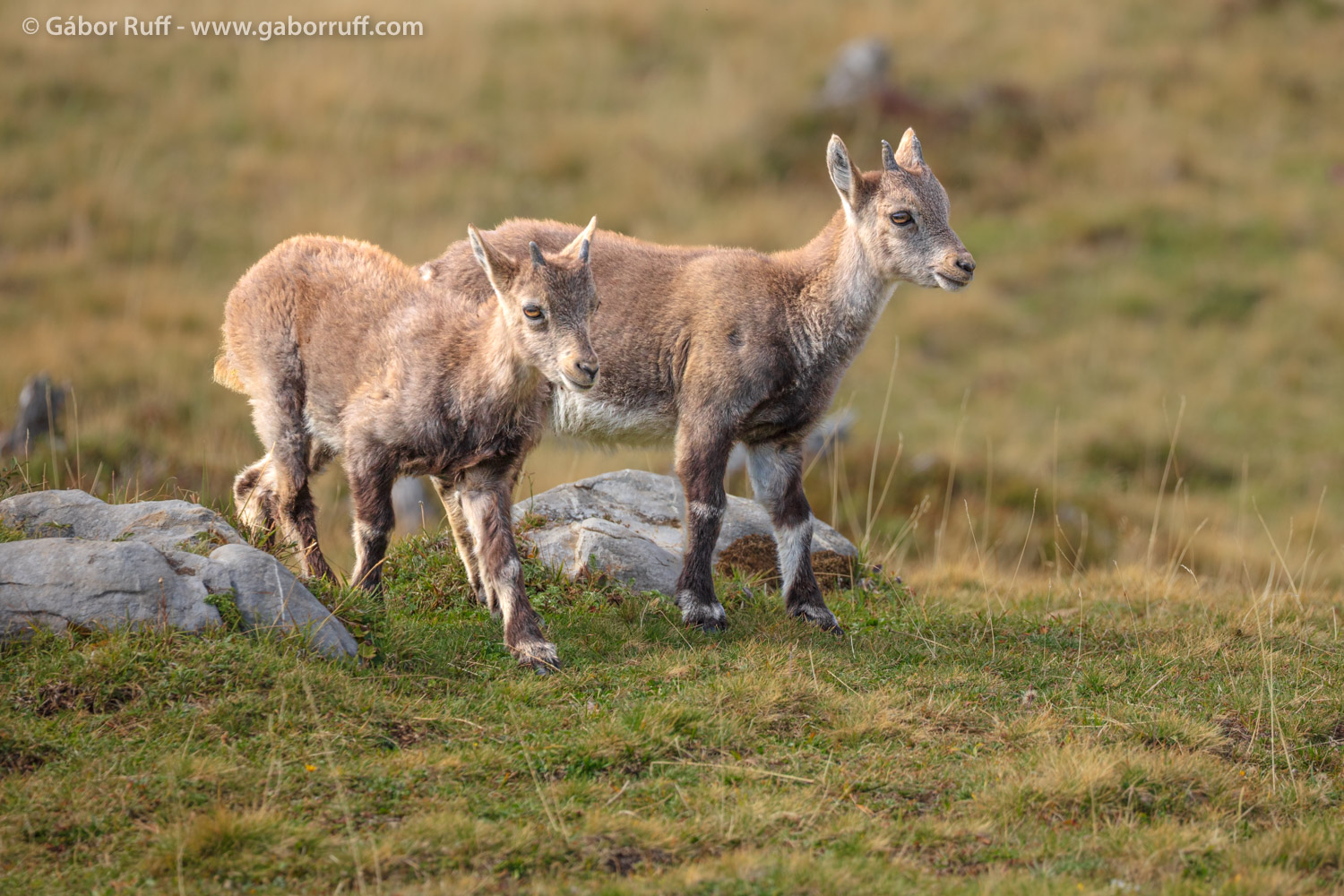
Somewhere between 75 and 100 animals live along this ridge, and this particular group consisted of around ten individuals. Most were females, accompanied by several kids and a few young males. The older males, with their impressive horns, live in separate groups, and I still haven’t had the opportunity to photograph them. Nevertheless, I was delighted with the group I found. The ibexes seemed remarkably relaxed and completely unconcerned by my presence or by the other hikers passing along the trail. Their familiarity with people made it possible to observe them at remarkably close range without disturbing their natural behavior.
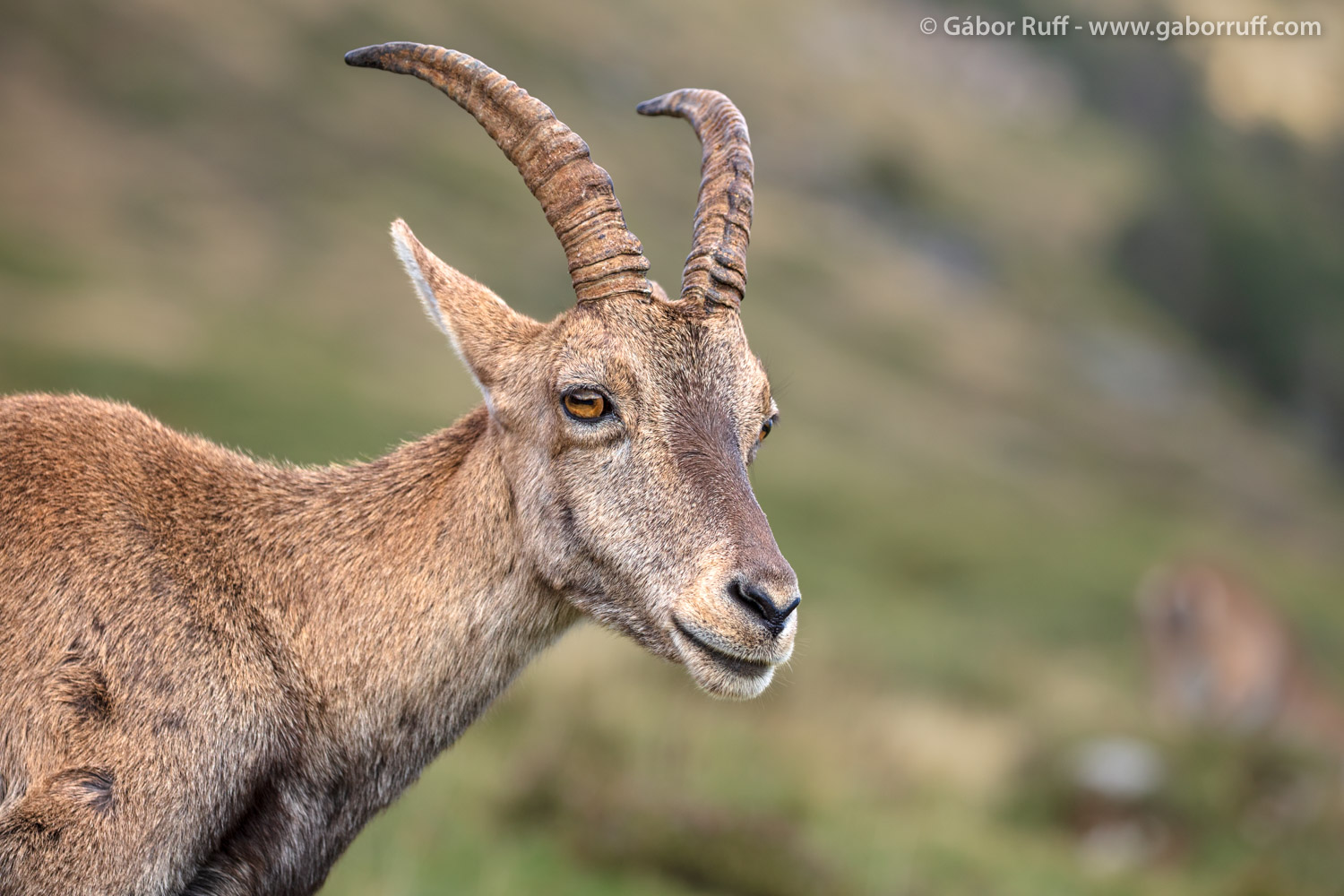
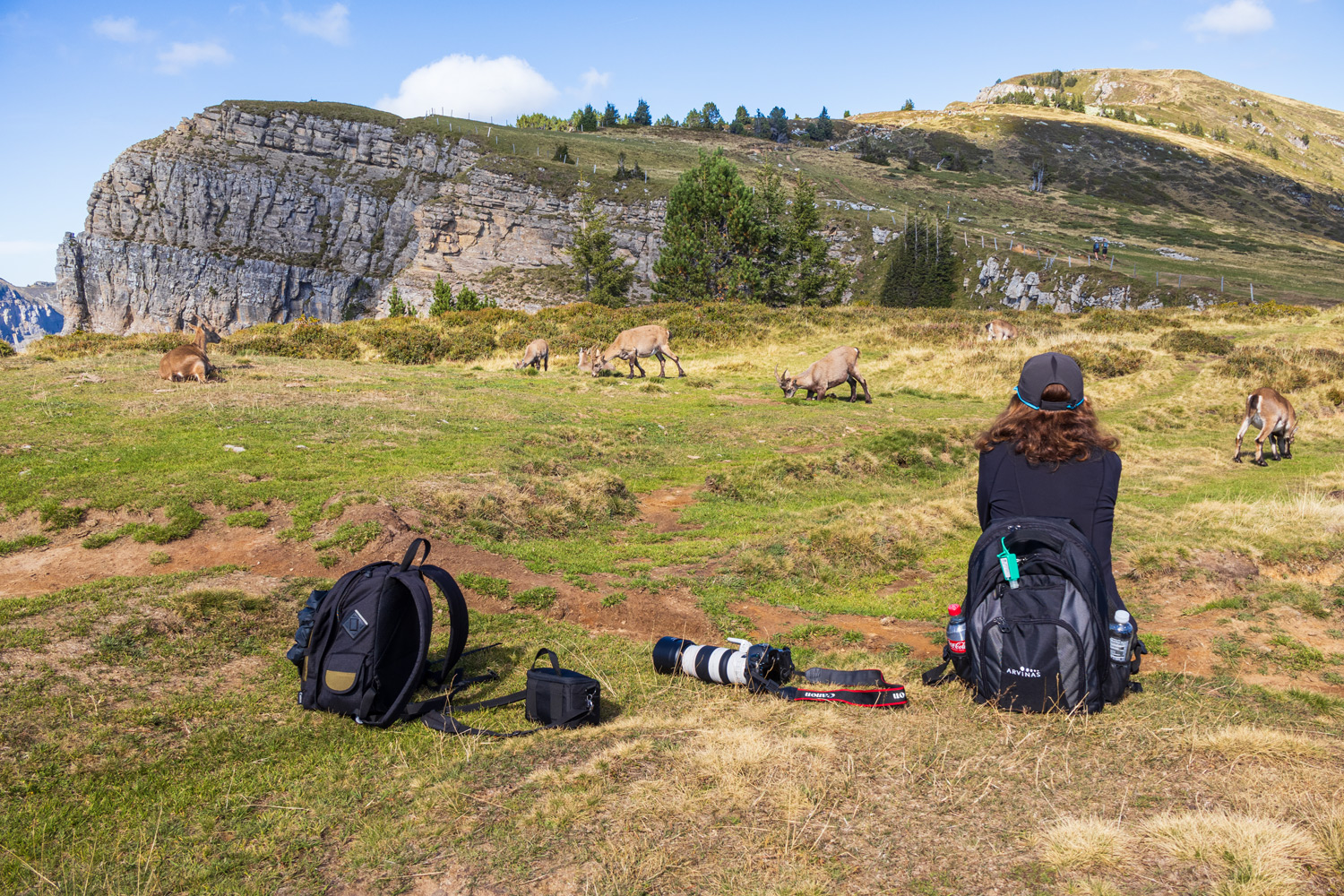
The weather was beautiful that day, mostly sunny and ideal for hiking and wildlife watching. For photography, however, the bright sunshine was less than perfect. Harsh midday light can make wildlife photography difficult, especially when you’re hoping to capture intimate portraits. Fortunately, clouds occasionally rolled in, softening the light and giving me brief windows of much better conditions for photographing the animals. That’s when I settled into one of my favorite approaches to wildlife photography: I simply sat down and let the animals come to me.
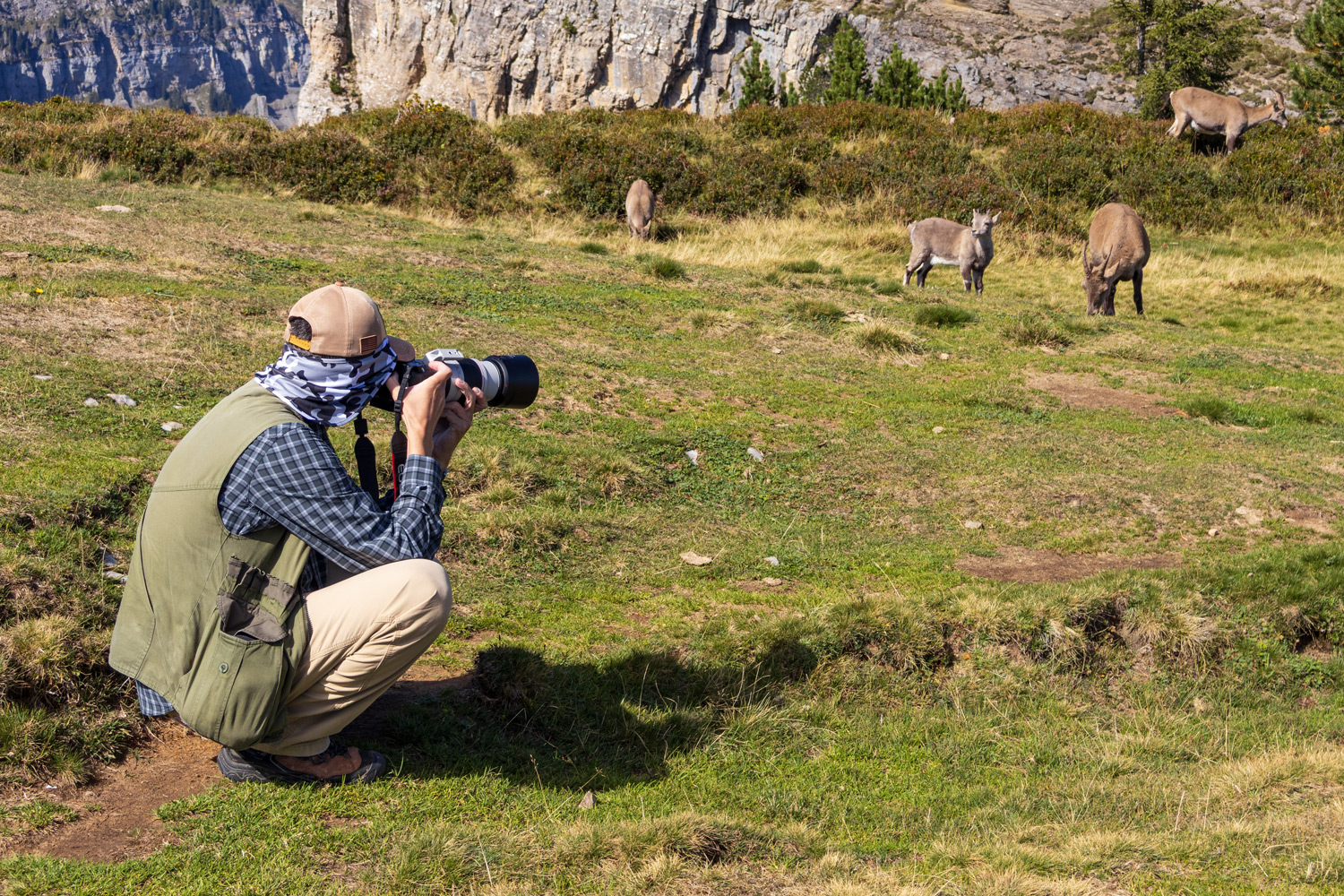
Although I enjoy photographing wildlife from hides, and I also love carefully approaching animals and getting close without disturbing them, there is something uniquely rewarding about being accepted by a wild animal and having it approach you on its own terms. In those moments, you feel less like an observer and more like a part of the natural world. Of course, it helps enormously when you’re in a place where wildlife has become accustomed to people, as is the case on the ridges of the Niederhorn. Still, the feeling of being accepted never gets old.
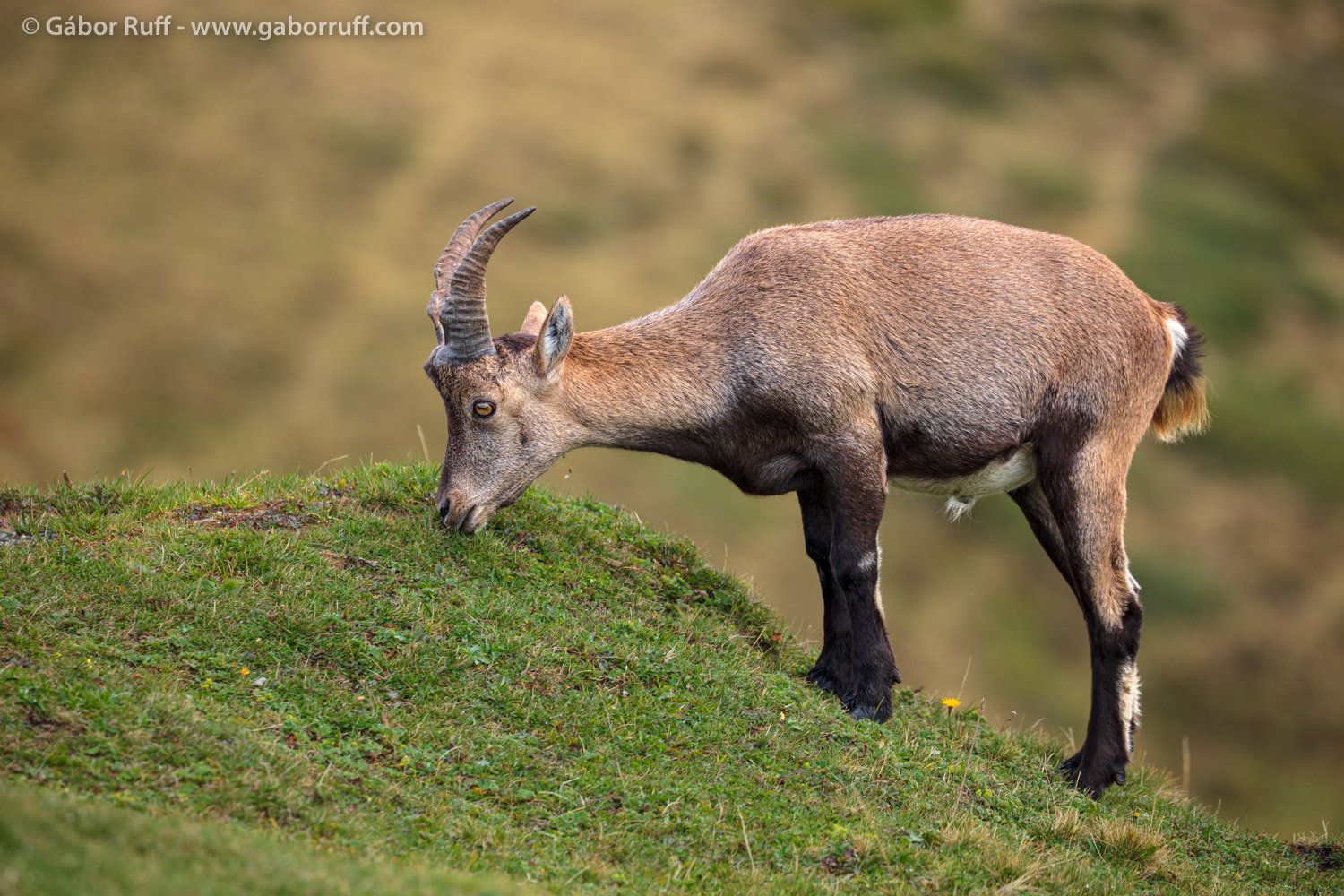
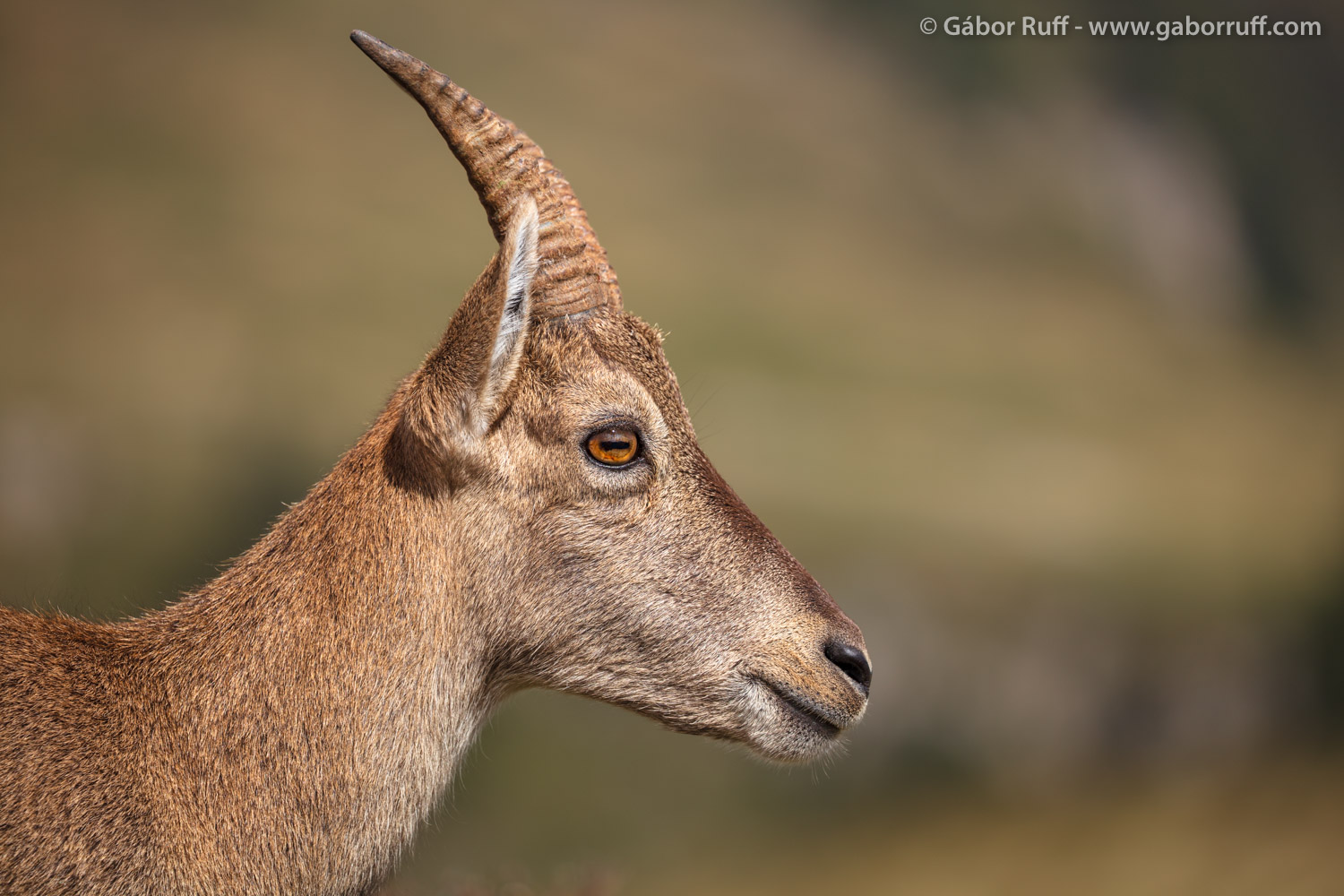
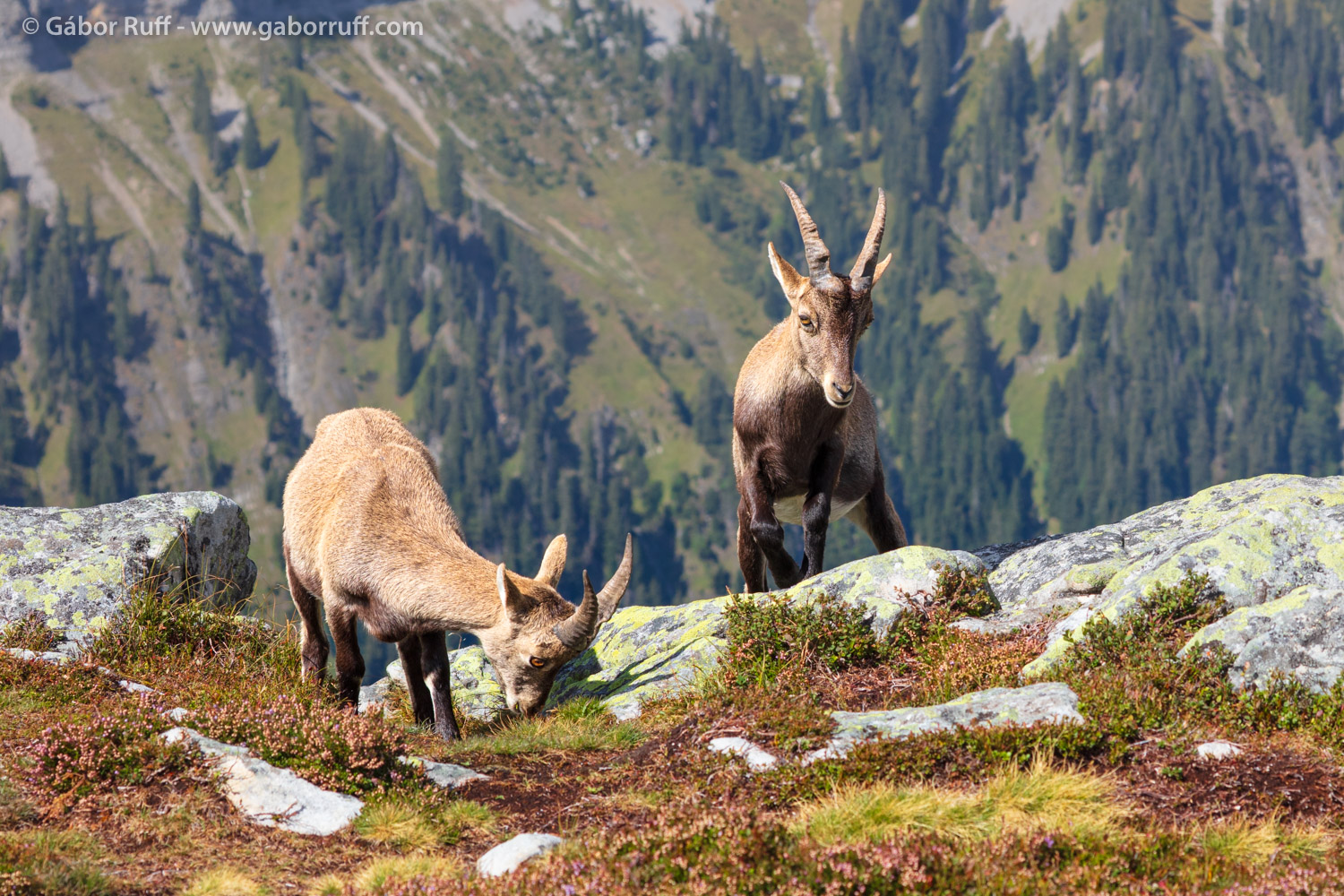
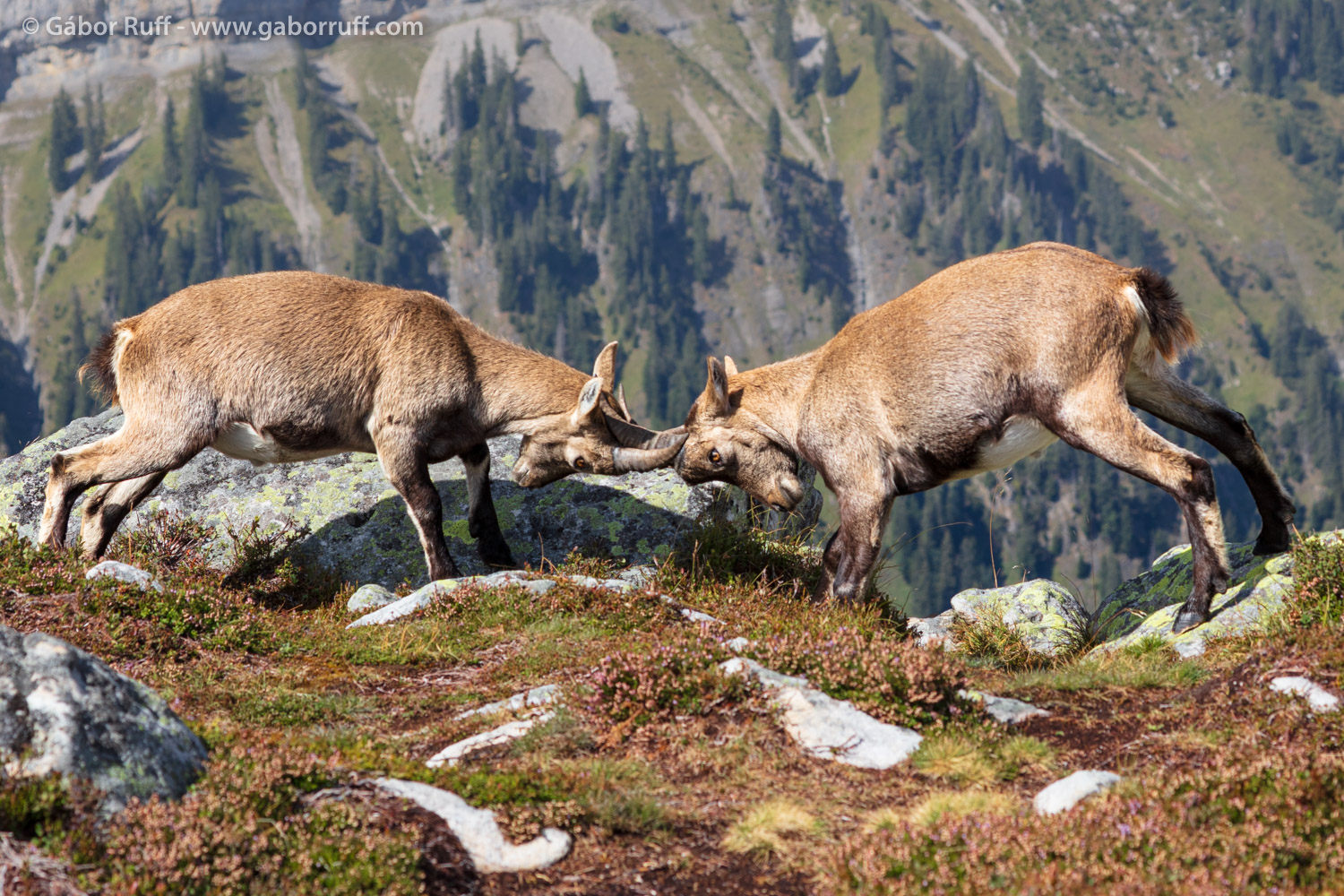
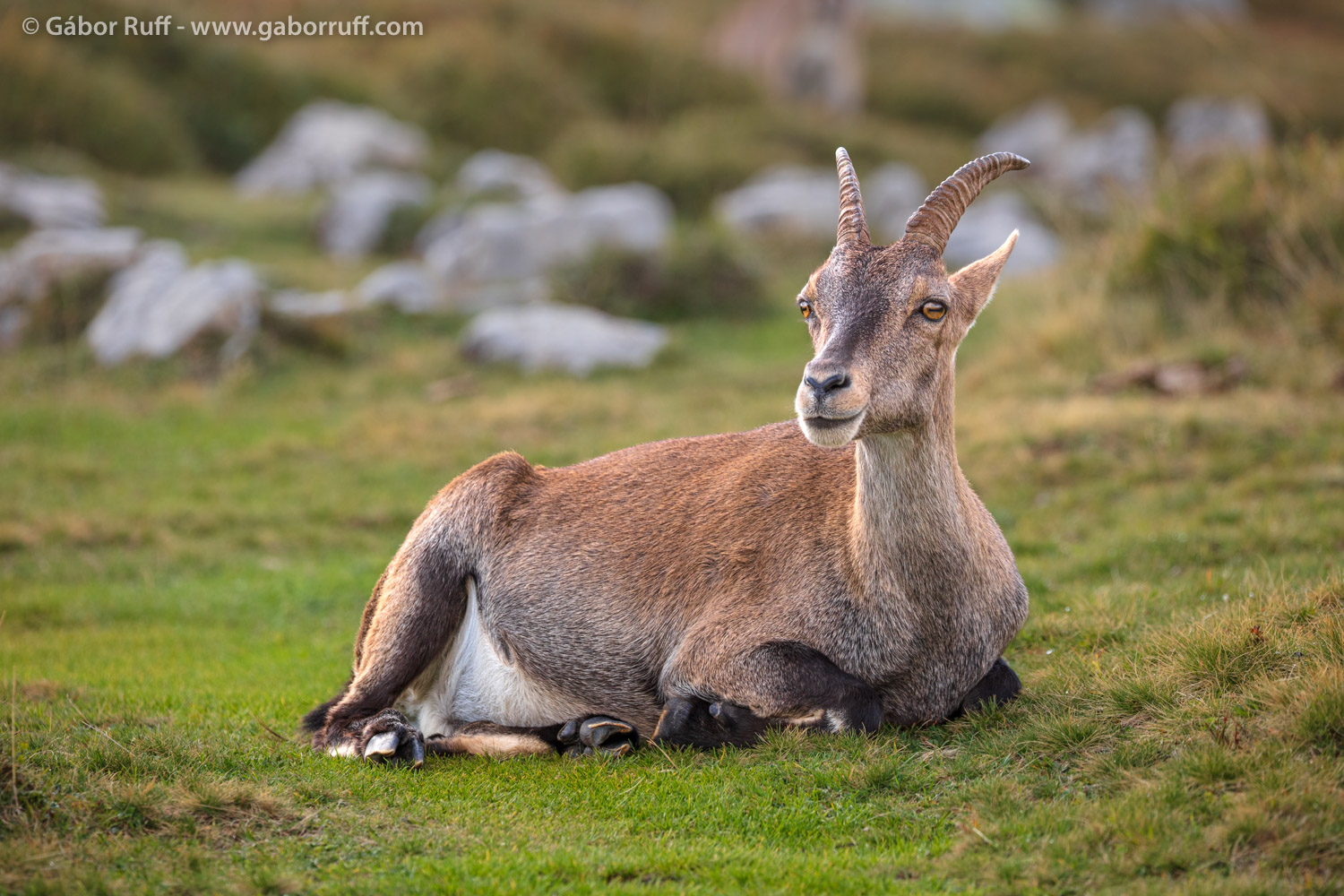
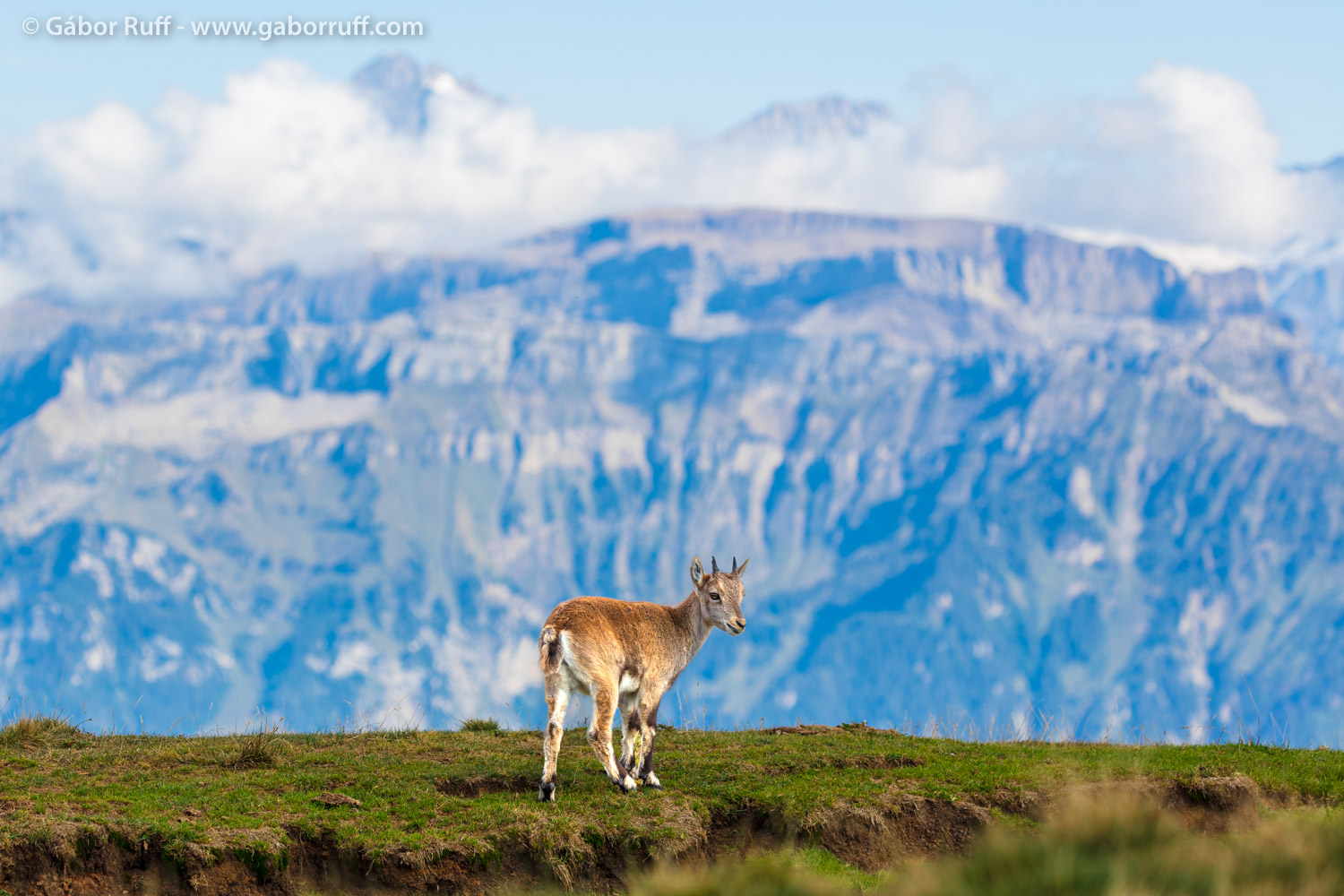
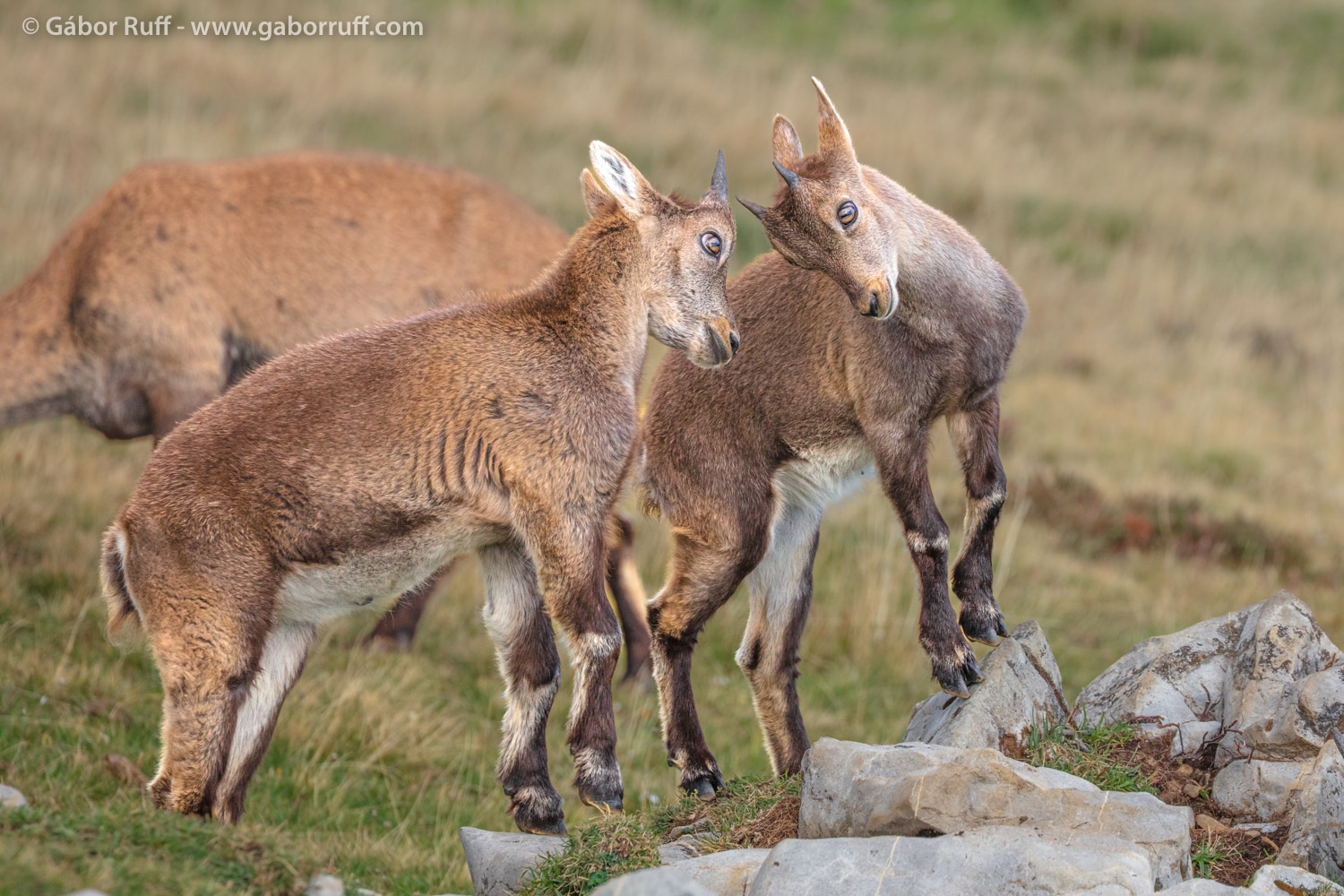
The ibex gradually went about their lives around me. I photographed them grazing on the short alpine grass, captured a series of close portraits, and watched the kids playing and exploring. The young males occasionally engaged in playful fights, giving me plenty of opportunities to photograph their energy and curiosity. Then came what I considered the ultimate sign that they were comfortable with me. One by one, the ibex began lying down around me. Soon they were resting just a few feet away, calmly ruminating as I sat among them.
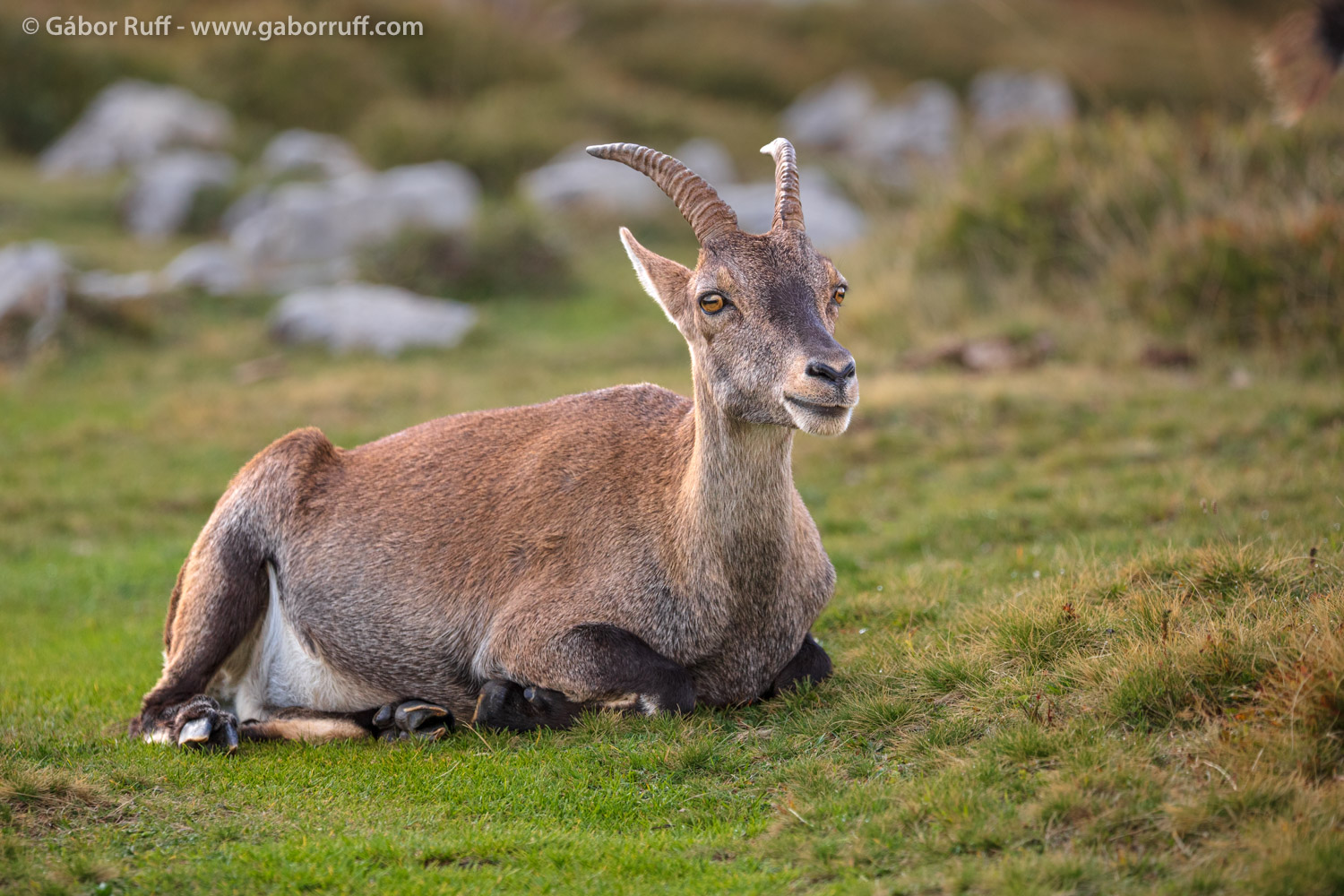
Like other ruminants, ibex regurgitate and rechew their food to help break down the tough plant fibers that make up their diet. Watching them quietly chew their cud while surrounded by the spectacular landscape of the Alps was one of those moments that makes wildlife photography so rewarding. While I was sitting there, another group of ibexes joined the first one. Suddenly, there were ibexes everywhere. At one point, I counted 28 animals surrounding me.
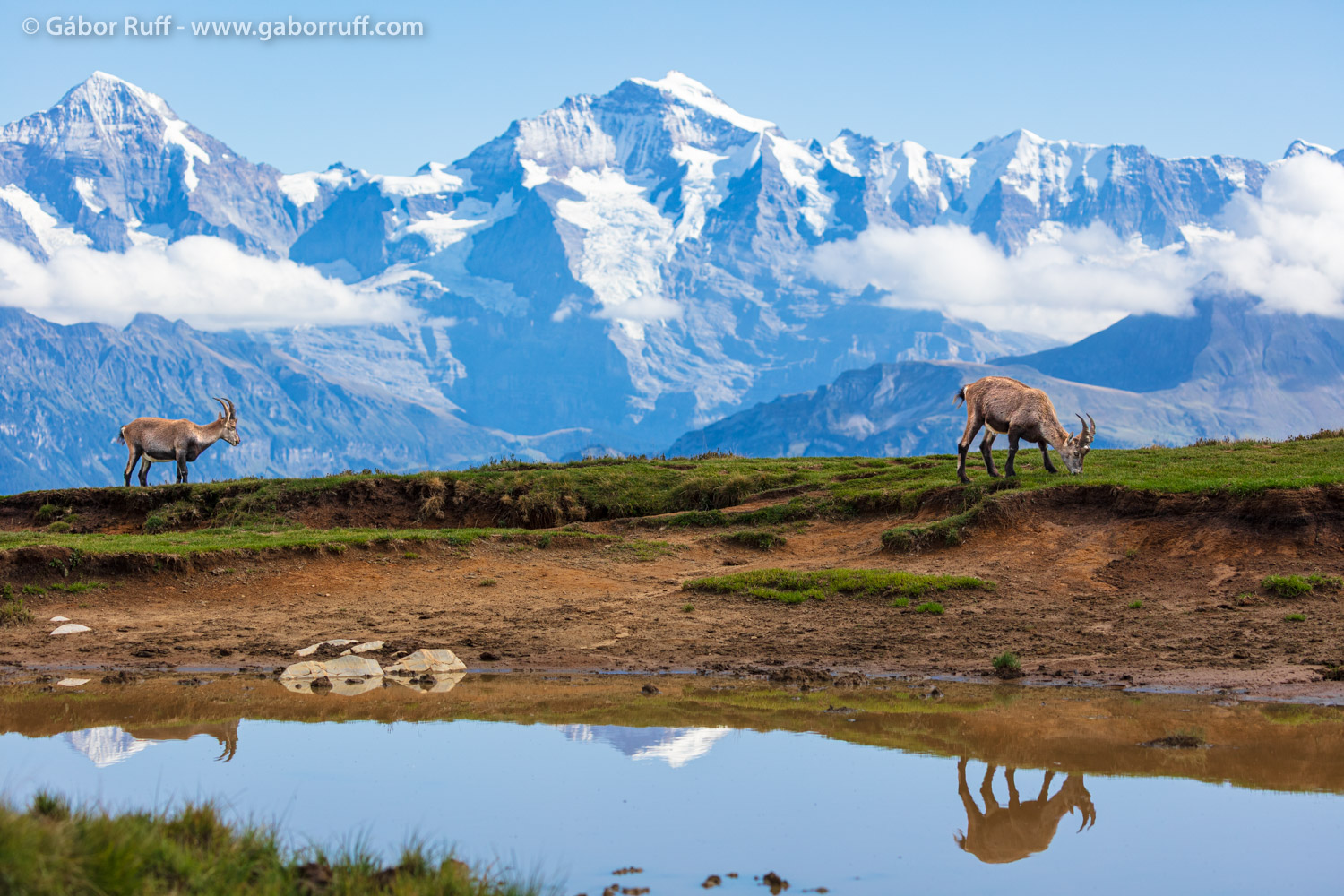
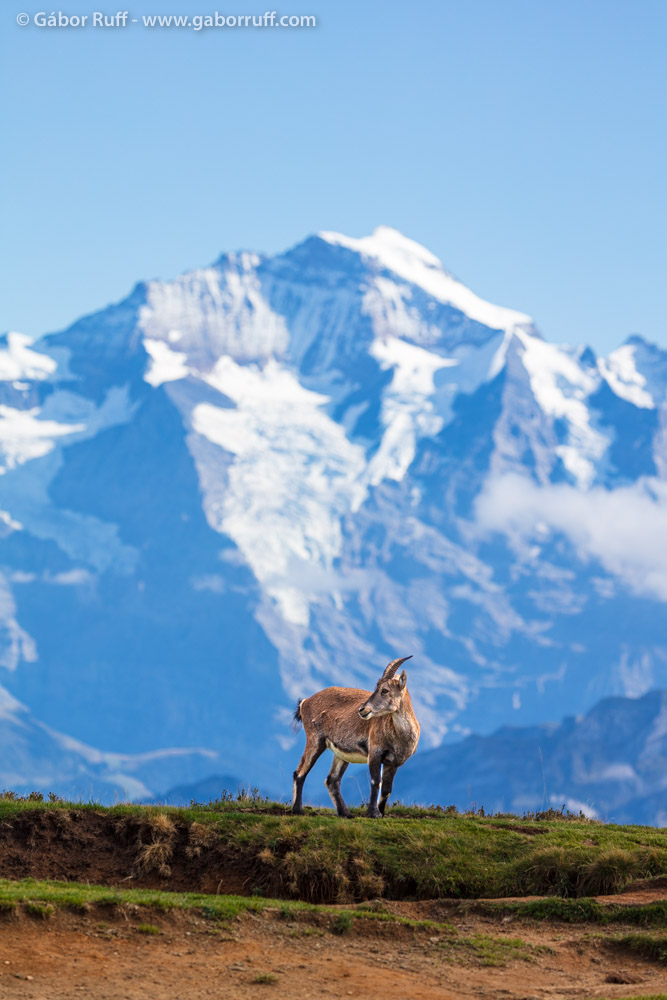
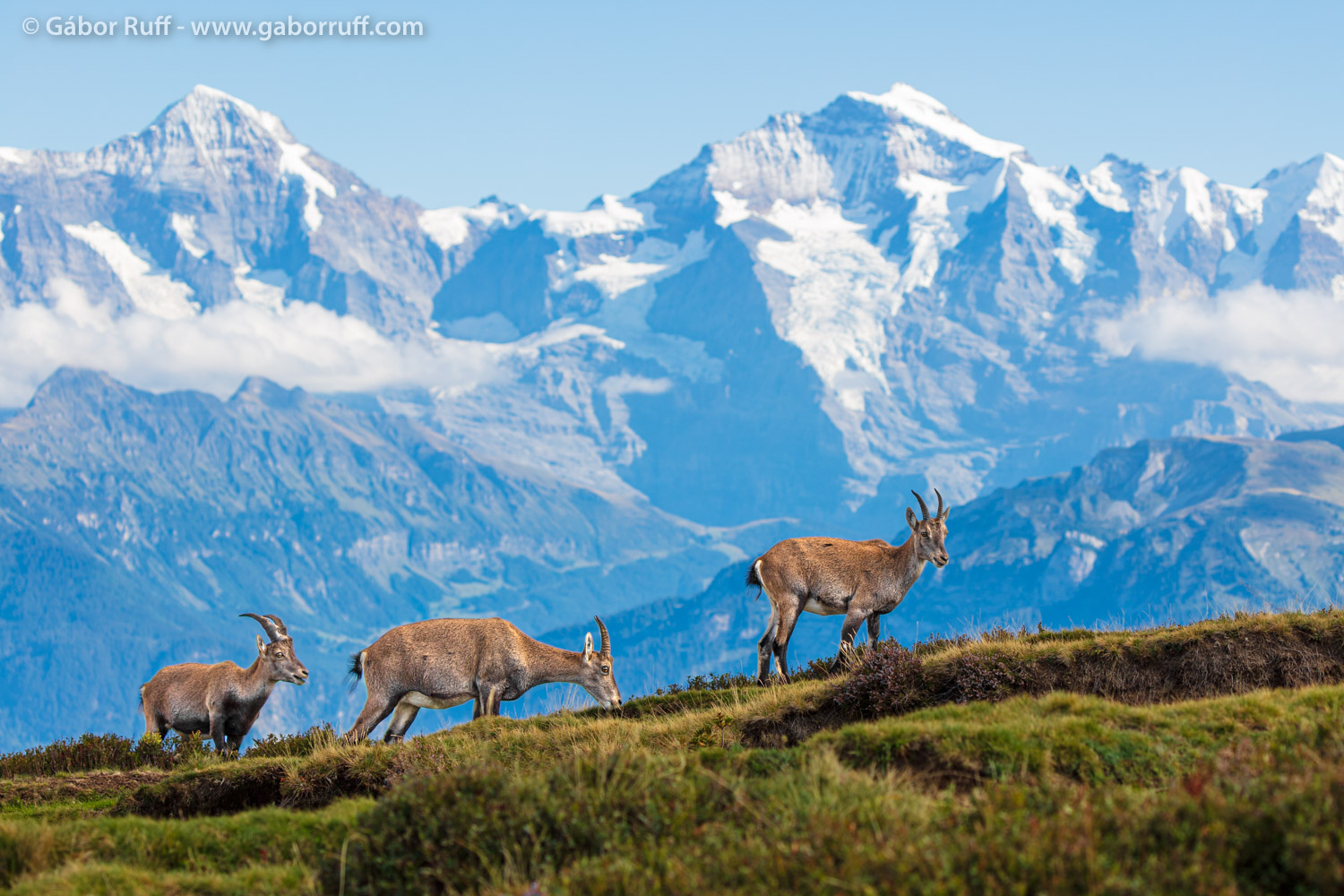
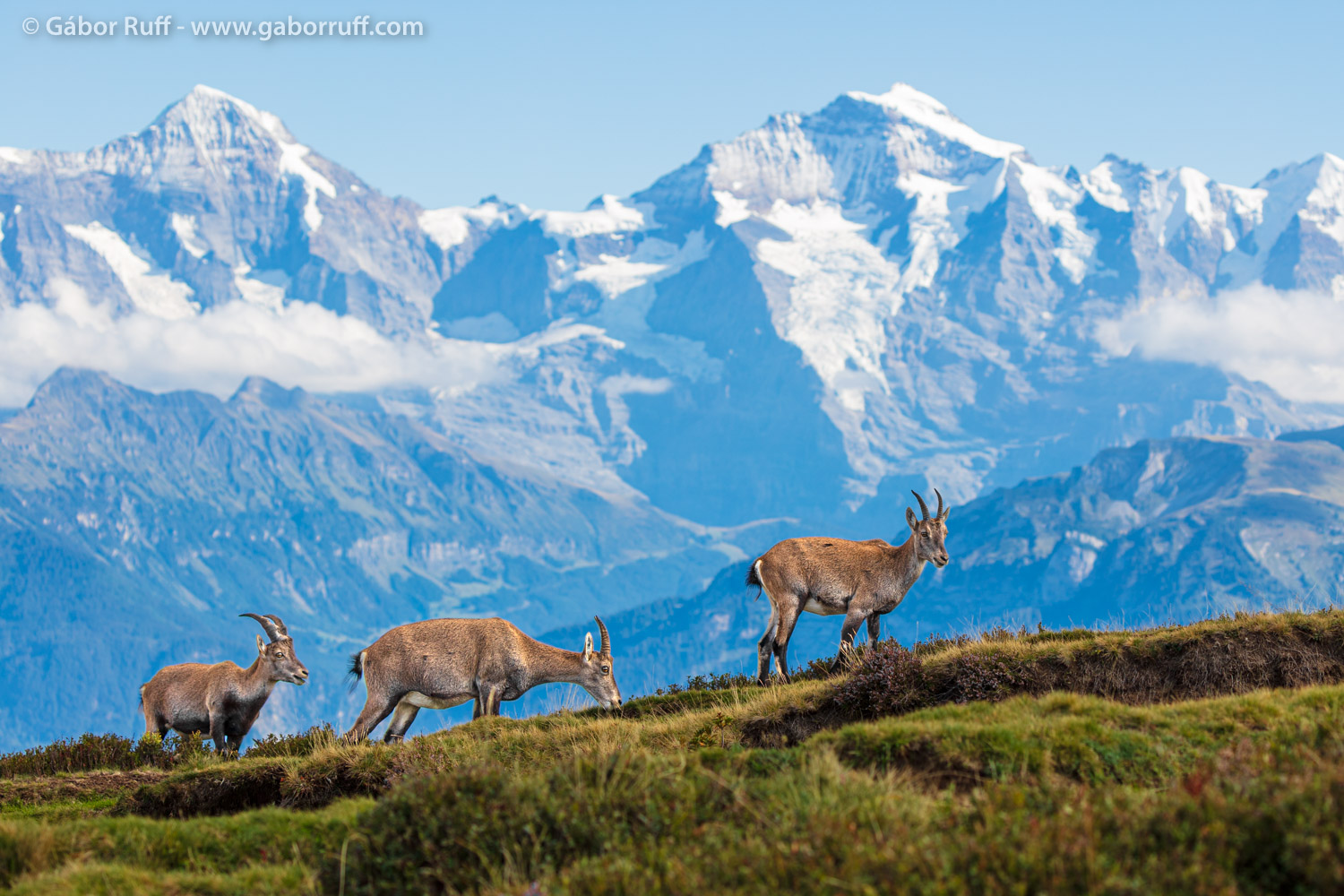
Eventually, though, I had to leave. I carefully stood up, trying not to disturb the animals, and began walking away from the group toward the trail back to the gondola. But as I left, something unexpected happened: the ibexes got up too and started following me. And then, almost unbelievably, they positioned themselves between me and the spectacular peaks of the Eiger, Mönch, and Jungfrau. It was as though they had deliberately chosen the perfect stage and were waiting for me to photograph them against one of the most iconic landscapes in the Alps. I couldn’t resist pressing the shutter. Those moments resulted in some of my favorite wildlife photographs of the year, not simply because of the beautiful animals or the dramatic Alpine landscape, but because of the way the encounter unfolded. I hadn’t forced the moment. I hadn’t pursued the animals or tried to manipulate their behavior. I had simply waited. And eventually, the ibexes came to me.
The day after Gabi’s conference ended, we returned to the Niederhorn together. Gabi wanted to see the ibex for herself. Three years earlier, we had visited Pontresina, a place famous for its alpine ibex, but unfortunately, we hadn’t been lucky enough to find them there. The Niederhorn made up for it. We encountered another relatively large group of ibexes right along the trail. This time the sun was shining relentlessly, but we didn’t mind at all. Without the pressure of photographing them, the bright sunshine made for a wonderful day of simply watching the animals and enjoying the mountains. And I didn’t feel the need to take many photographs. I had already captured pretty much everything I had hoped for the day before. We just sat and enjoyed the view and the wild animals around us.
Sometimes, wildlife photography isn’t about finding the rarest animal, the perfect light, or the most dramatic landscape. Sometimes it’s about sitting quietly, being patient, and allowing an animal to decide that you’re no longer something worth worrying about. For a few hours on the Niederhorn, I was fortunate enough to be accepted into the world of the ibex.
Here is a small gallery of my favorite alpine ibex photographs from the Bernese Alps. All photographs were taken handheld with my Canon EOS 5DsR paired with my image-stabilized 100–400mm lens.